
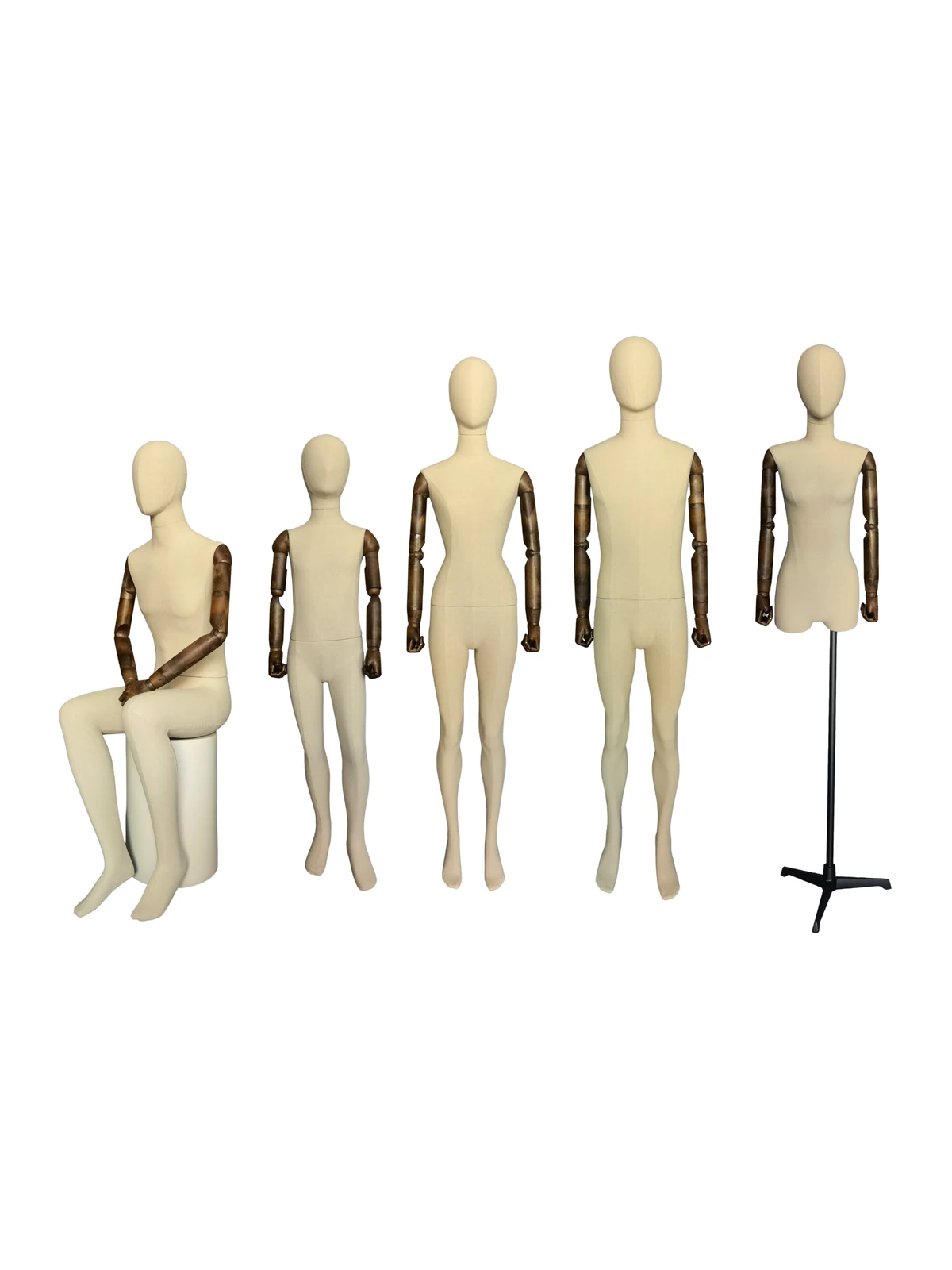
How Fabric-Covered Dress Forms Are Made
Learn how fabric-covered dress forms are built, finished and customized for fashion retail, showrooms and garment presentation.
Fabric-covered dress forms combine a sculpted body with a textile surface, creating a display that feels softer and more tactile than a painted mannequin. They are used in fashion boutiques, showrooms, tailoring environments and brand presentations where material character matters. Although the finished product appears simple, consistent results depend on a sequence of structural, textile and finishing decisions.
1. Defining the shape and purpose
The process starts with the intended use. A display form for finished garments may prioritize clean proportions and visual balance. A working dress form may require a construction that supports pinning and repeated fitting. A decorative torso for accessories may need a compact shape, special neck cap or tabletop base.
Buyers should provide garment category, target size, body measurements, pose, base style and photographs of the store environment. These inputs guide the form before fabric is selected.
2. Building the inner body
The inner body establishes the dimensions and stability of the form. Construction varies by model and may include molded shells, foam sections, reinforcement and mounting hardware. Connection points for arms, neck caps, bases or hanging systems must be planned at this stage because they affect both function and the final appearance.
If pinning is required, it must be specified explicitly. A fabric surface alone does not make a form pinnable; the internal layers and usable pin depth determine whether the product is suitable for fitting work.
3. Preparing the surface
Before upholstery, the body is checked for symmetry, smooth transitions and secure hardware. Uneven areas can become more visible after fabric is stretched across them. A thin padding layer may be applied where the design calls for a softer touch or smoother textile tension.
4. Selecting and testing the fabric
Linen, cotton, velvet, canvas and blended textiles each behave differently. Important factors include stretch direction, thickness, weave, colorfastness, abrasion resistance and batch consistency. Curved areas require enough flexibility to sit smoothly without distorting the weave.
A physical swatch should be reviewed under relevant lighting. Digital color references are useful for direction, but they cannot show texture, sheen or the way a fabric changes across a three-dimensional surface.
5. Cutting, fitting and seam control
The textile is cut into shaped panels and fitted around the form. Seam placement is a design decision as well as a production detail. Seams may be hidden along less visible lines, used to reinforce the silhouette or intentionally exposed as part of the visual language.
Tension must remain balanced. Too little tension creates wrinkles; too much can distort the body, pull seams out of position or make future repairs difficult. Skilled hand finishing is especially important around shoulders, necks, hips and joint openings.
6. Adding hardware and final details
Neck caps, arm fittings and bases complete the form. Wood, brushed metal, polished metal and painted hardware can produce very different moods. The supplier should confirm finishes, dimensions and connection methods in the sample specification so the same combination can be reproduced in bulk.
7. Quality inspection and packing
- Check measurements against the approved size chart.
- Review fabric color, weave direction and seam alignment.
- Inspect the surface for wrinkles, marks or loose edges.
- Test joints, bases and removable components.
- Protect textile surfaces from pressure, moisture and abrasion during shipping.
From sample to repeatable collection
A successful fabric form is not only attractive; it is documented well enough to reproduce. Keep approved fabric references, measurements, seam positions, hardware codes and packing instructions together. This makes later store rollouts and replacements more consistent.
For repeat orders, keep one approved reference sample in controlled storage. It gives design, procurement and production teams a shared standard when fabrics or hardware need to be checked months after the first delivery.
Browse XINTU Display’s display products or send a project brief to discuss fabric, body shape and hardware options.