
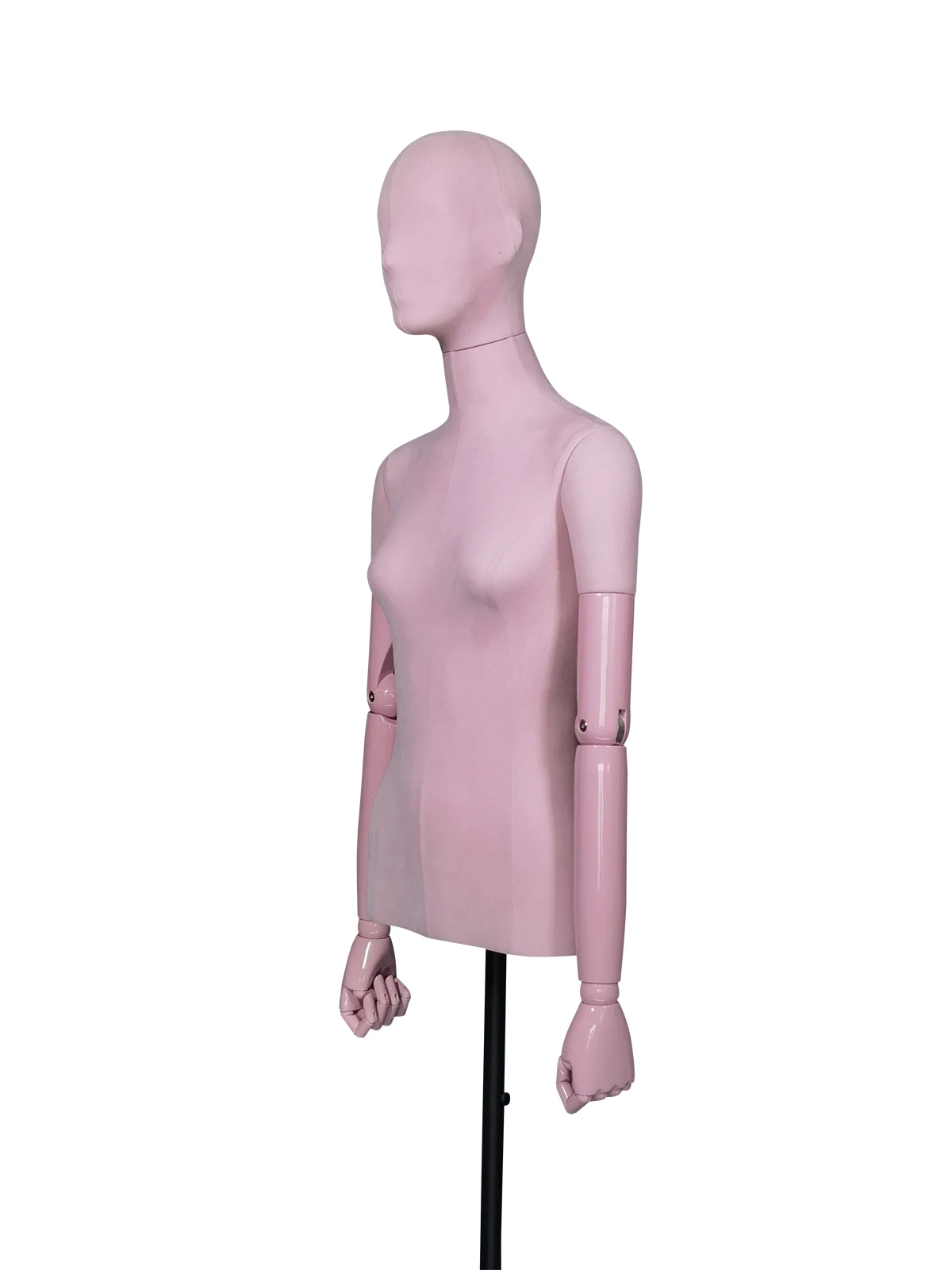
Torso Mannequins: A Buyer’s Guide for Retail Displays
How to choose torso and half-body mannequins for retail: use cases, finishes, arm styles, bases and customization for boutiques and brands.
Torso mannequins are among the most versatile display forms in retail. Compact, affordable and easy to style, they let brands present garments at eye level in windows, on tabletops and across compact floor space. This guide explains what a torso mannequin is, when to use one, and how to choose the right configuration for your store or brand program.
What is a torso mannequin?
A torso mannequin—also called a half-body mannequin—represents the upper body from roughly the shoulders or neck down to the hips or upper thigh, without full legs. It may be headless and handless, or fitted with arms in wooden, painted or ABS styles. Because it focuses attention on the garment’s fit across the chest, waist and shoulders, it is ideal for tops, shirts, jackets, knitwear and tailoring.
When to use torso mannequins
Torso forms shine wherever full-body mannequins are unnecessary or impractical:
- Window displays where you want to feature a garment without a large footprint.
- Tabletop and counter displays using tabletop or short-stand versions.
- Folded and layered merchandising that highlights fabric and cut.
- Tailoring and fittings, where a clean torso shows structure and drape.
- Multi-unit runs along a wall or table to present a collection consistently.
How to choose the right torso mannequin
Finish: fabric-covered or hard shell
Fabric-covered (linen, cotton or velvet) torsos give a soft, premium boutique feel and pair well with pinning. Hard fiberglass or painted finishes are durable and easy to wipe down. Your choice sets the tone of the display and how garments are attached.
Arms: none, wooden or ABS
Headless-handless torsos keep the focus purely on the garment. Add wooden or ABS arms when you want to pose sleeves, show jackets open, or present accessories. Removable arms give you both options in one form.
Base type
Bases affect stability and style: a tripod stand offers adjustable height, round or square metal and wooden bases suit floor displays, and tabletop mounts work for counters. Match the base to where the form will stand and the look you want.
Gender and sizing
Choose male, female or unisex torsos to match your product, and confirm the key measurements—chest, waist and shoulder—against the garments you sell. Correct sizing is what makes clothes hang the way they should.
Customization options
For brands, torso mannequins are highly customizable: fabric type and color, arm style, base material and finish, and branding such as neck labels or logo plates. Ordering a consistent custom specification means every unit—and every reorder—matches across your stores.
Frequently asked questions
Are torso mannequins cheaper than full-body?
Generally yes. With less material and no legs, torso forms cost less and take up less space, which is why they are popular for multi-unit and window use.
Can torso mannequins be used for tailoring?
Yes. A clean, well-proportioned torso—especially a fabric-covered one that accepts pins—works well for fittings, alterations and showing structure.
What is the difference between a torso mannequin and a dress form?
They overlap. A dress form is a torso built specifically for garment construction and fitting, usually pinnable and sometimes adjustable, while a display torso is optimized for merchandising. Many fabric-covered torsos serve both purposes.
Source custom torso mannequins
XINTU manufactures custom torso and half-body mannequins for fashion brands, boutiques and visual merchandisers worldwide—fabric-covered or hard-finish, with your choice of arms, bases and branding. Tell us your product type and store setup, and we will recommend the right configuration.
Request a quote or samples by email or WhatsApp for a fast response.