
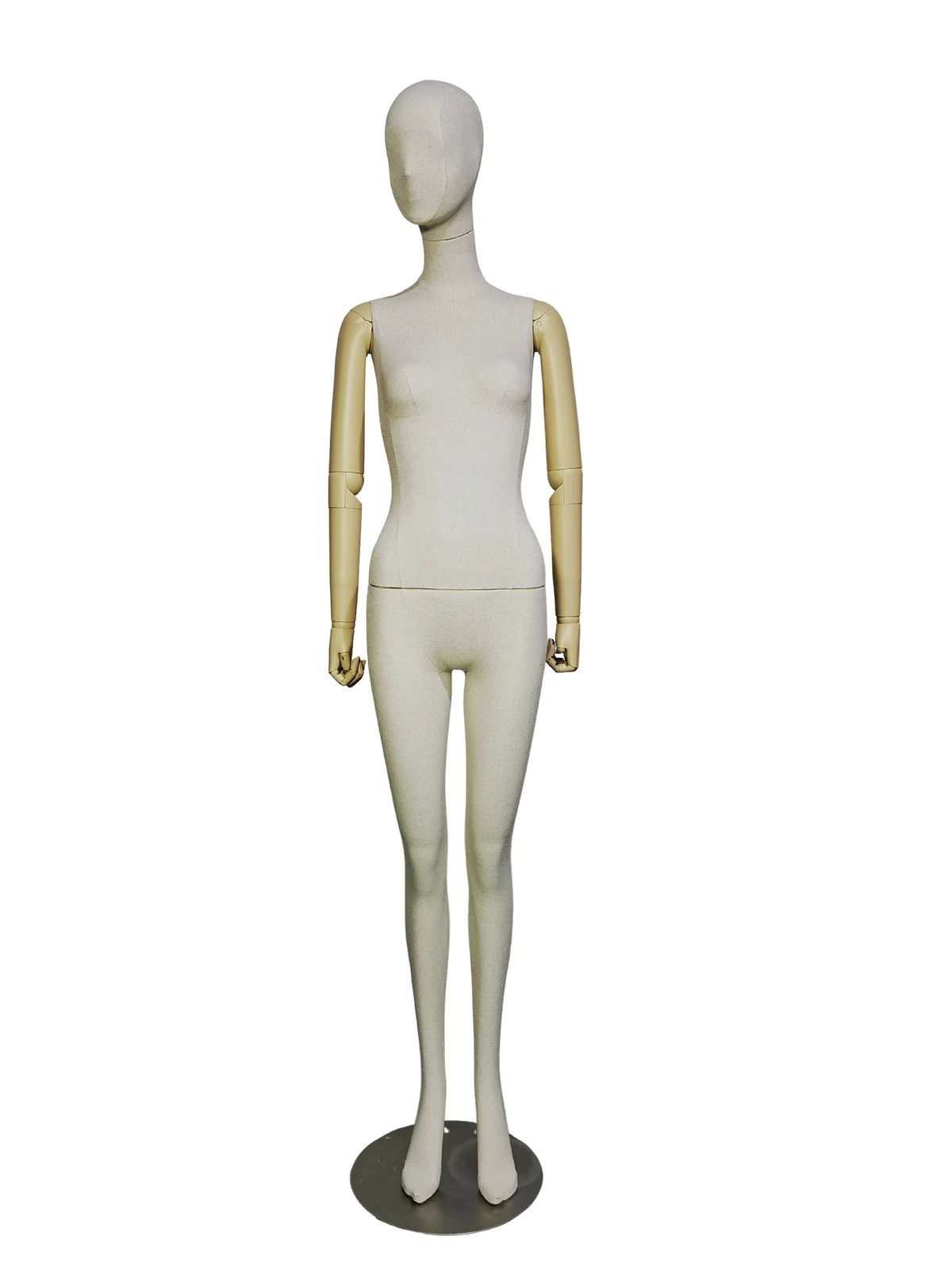
Luxury and Boutique Mannequins: A Premium Display Guide
What sets luxury and boutique mannequins apart—premium fabrics, refined finishes, craftsmanship and custom branding for high-end retail displays.
In premium retail, a mannequin is never just a stand for clothing—it is part of the brand statement. A luxury mannequin signals quality before a customer touches a single garment, while a cheap or mismatched form quietly undermines an expensive collection. This guide explains what separates luxury and boutique mannequins from standard ones, and how high-end brands specify forms that elevate the whole display.
What makes a mannequin “luxury”?
Luxury is the sum of materials, finish, proportion and consistency. A premium mannequin looks intentional from every angle and holds that quality across an entire fleet.
Premium fabrics and coverings
Fabric-covered forms in linen, fine cotton or velvet give boutiques a tactile, tailored feel that hard plastic cannot match. The covering should be evenly tensioned, colorfast and cleanly seamed, with a smooth base form underneath so the surface reads as considered rather than functional.
Refined finishes and details
Details carry the luxury impression: matte or hand-applied finishes, elegant wooden or metal arms, neat necklines and discreet hardware. Nothing should look mass-produced or unfinished up close, because boutique customers view displays at arm’s length.
Craftsmanship and consistency
High-end retail often means many stores. A luxury supplier reproduces the same proportions, color and finish batch after batch, so a mannequin in one boutique matches the one across the world. That consistency is itself a mark of quality.
Bespoke bases and hardware
Premium bases—brushed metal, solid wood, or a refined tripod—anchor the form and reinforce the aesthetic. Finish, weight and stability all contribute to how “expensive” a display feels.
Luxury versus standard mannequins
Standard mannequins prioritize low cost and availability; luxury mannequins prioritize material quality, finish and brand alignment. The difference shows in the covering, the arms, the base and—crucially—the consistency across units. For a flagship or boutique, the premium specification protects the value of everything displayed on it.
Design choices for boutique displays
Boutiques often favor fabric-covered forms in neutral or brand-matched tones, half-body and full-body mixes to vary height, and wooden-arm styles for a warm, editorial look. Keeping a tight, coherent palette across forms makes a small space feel curated rather than crowded.
Customization and branding
The strongest luxury programs are custom: fabric and color matched to the brand, arm and base styles chosen for the interior, and subtle branding such as neck labels or engraved plates. Ordering to a fixed custom specification keeps every store on-brand and every reorder identical.
Frequently asked questions
Are fabric-covered mannequins considered luxury?
Fabric-covered forms are widely used in premium retail because of their tactile, tailored appearance—but the luxury impression still depends on covering quality, finish and consistency, not the material alone.
Can luxury mannequins be customized to match a brand?
Yes. Premium forms are typically made to order, with fabric, color, arms, base and branding specified to fit the brand’s identity and store design.
Create a premium mannequin program
XINTU manufactures custom luxury and boutique mannequins for high-end fashion brands and retailers worldwide—fabric-covered finishes, refined arms and bases, brand-matched colors and discreet branding, produced consistently across large fleets. Share your interior and brand references, and we will develop a specification that fits.
Discuss a premium project with us by email or WhatsApp for a fast, tailored response.