Hat Display Heads: Size, Crown Support and Brim Clearance
Specify hat display heads by internal fit, crown depth, brim support and fixture clearance, with a sample checklist for millinery and accessory retailers.
A hat display head should receive the hat without force, support its intended crown shape and leave the brim clear of surrounding fixtures. Specify the hat’s internal shape and depth as well as circumference. Two forms with the same nominal head size can present the same hat differently.
Millinery and accessory retailers often need several support formats within one coordinated display. A structured felt hat, a soft cap and a close-fitting knitted beanie do not behave alike. This guide focuses on the fit between hat and support; our general display head guide compares the wider range of accessory forms.
Measure the hat where it contacts the form
Record the internal circumference at the wearing band or intended contact line. Also note the opening’s front-to-back and side-to-side shape, crown depth, brim span and any trim that needs clearance. Use the milliner’s or product team’s approved measurement method and units.
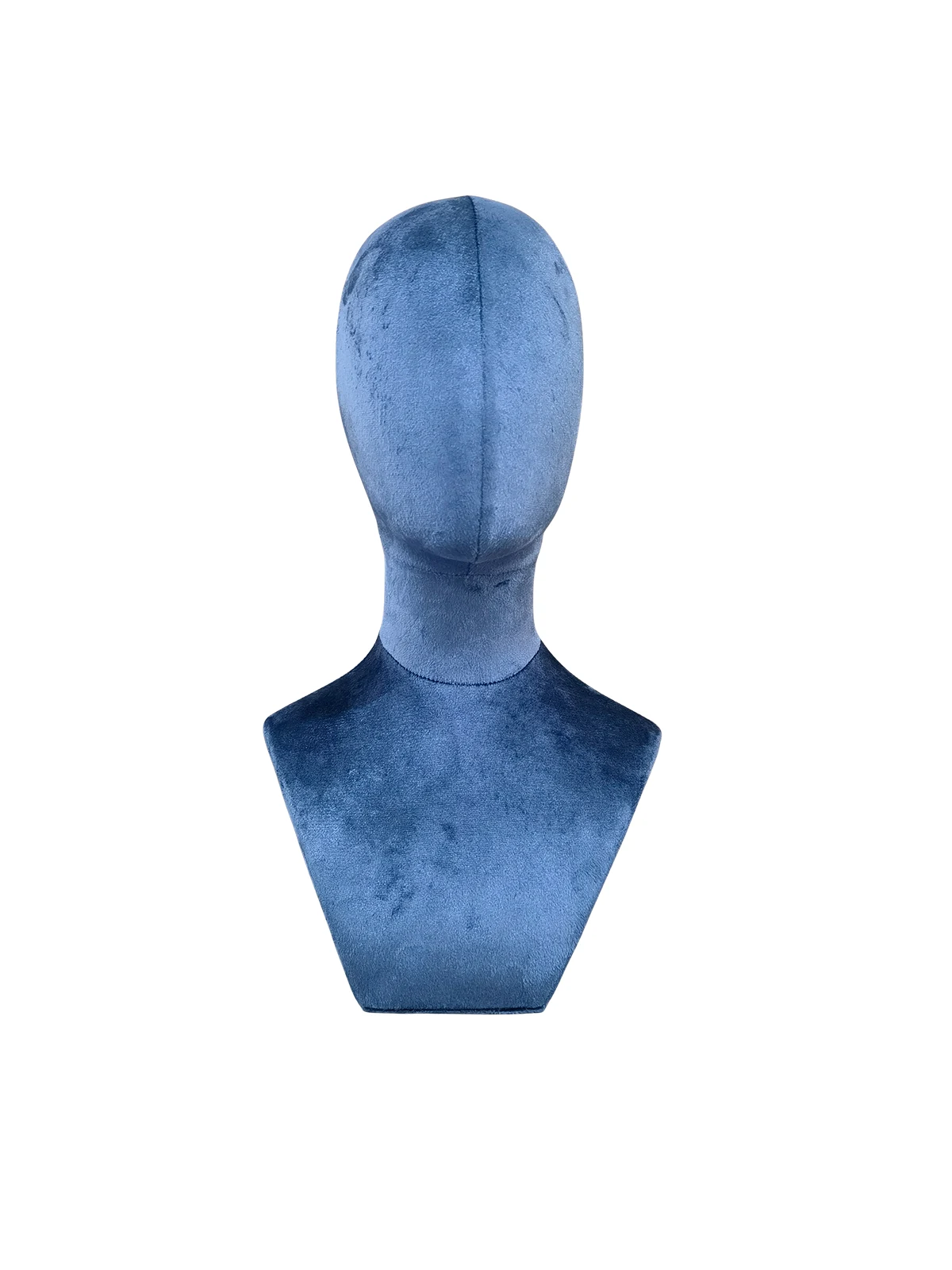
A decorative head can have a narrow neck and a large upper crown. The hat may settle at a different position from the one suggested by the head’s circumference label. Ask for a drawing showing the measurement line, then approve the position with a physical sample.
| Detail | What to provide | What to check on the sample |
|---|---|---|
| Internal fit | Wearing-band measurement and opening shape | The hat seats without stretching or squeezing |
| Crown support | Depth and intended crown contour | The form supports the shape without creating a new bulge |
| Brim | Width, slope and areas needing support | The brim keeps its intended line without pressing on a shelf |
| Trim | Feathers, bows, ribbons or other projections | Adjacent products and case walls leave them clear |
| Display height | Head, stand and riser dimensions together | The installed hat fits the fixture and customer view |
| Handling access | How staff and customers will lift the hat | The item can be removed without catching or disturbing its neighbor |
Match support to the hat’s construction
For a structured hat, assess whether the form preserves the crown’s intended creases and profile. A support that fills every internal space can push a shaped crown out of its design. A support that is too small can let the hat settle unevenly.
For soft caps, check how the crown sits and whether the visor angle looks intentional. For stretch headwear, avoid a form that holds the opening under sustained tension. These are different sample questions, so do not approve the entire range from one easy-fitting hat.
The Canadian Conservation Institute’s costume-accessory guidance emphasises support for hat crowns and brims and a form that receives the hat easily. That guidance concerns heritage collections. For current retail products, use the support principle with the maker’s handling instructions and the intended display duration.
Decide between a head, crown form and stand
A full head gives a worn context and can coordinate with nearby mannequins. A simplified crown form keeps attention on the hat and may use less visual space. A stand can work when its contact area supports the product appropriately; a small contact point needs particular review on soft or delicate structures.
Ask where the load is carried in each option. The brim should not become an unintended support simply because the stand is too short. Where a brim needs additional support, have the mount design agreed with the product team rather than bending it to fit the shelf.
Check surface contact and finish
Review seams, edges and surface texture at the actual contact areas. Fine linings, open weaves and trims can catch on rough edges. A fabric covering should be evaluated for fiber shedding, color transfer and grip; a coated surface should be assessed in its finished condition.
Approve the visual color separately from contact suitability. A dark head may make a pale hat stand out, while a head close to the hat color may emphasise silhouette. Use the display fabric color guide for palette decisions, then test the specific material combination.
Plan brim clearance across the whole fixture
Measure the dressed outline, including trim, rather than spacing bare heads first. Adjacent brims may overlap from the customer’s viewpoint even when the bases fit neatly on the shelf. Check both approach directions and any glass reflections.
When heights vary, test the upper hat’s brim against the lower hat’s crown and trim. Leave space for a hand to remove the product in the intended direction. There is no single spacing figure that suits every brim width or fixture; the approved layout should show the actual hat envelopes.
The props and risers guide explains height variation, and the lighting guide helps assess shadows from broad brims.
Use a sample approval sequence
- Select representative hats, including the shallowest crown, widest brim and most delicate trim.
- Record each hat and support reference with the agreed contact-line measurements.
- Place the hat without force and confirm its intended position from front, side and back.
- Review crown shape, brim clearance and contact marks over the planned trial period.
- Repeat removal and replacement using the intended handling method.
- Install the sample in the actual fixture with neighboring products and labels.
- Record the approved combination and any limits on the hat types it can support.
This is a proposed retail checklist, not a universal conservation procedure. Historic or fragile hats need specialist assessment. Keep the approved support dimensions and finish reference for later orders so a replacement form does not quietly change the fit.
Frequently asked questions
What size display head should I use for hats?
Start with the hat’s internal contact-line measurements, shape and depth. Verify the seated position on a sample rather than choosing by one circumference figure.
Can one head display every hat in a shop?
A single head may suit a limited group. Different crown depths, rigid shapes and stretch openings often require separate approved supports.
Should the brim rest on the shelf?
Only if that contact is intentional and approved for the hat. Check whether it changes the brim shape; provide suitable clearance or designed support where needed.
Can a hat display head be used for long-term storage?
Approve storage separately. Contact materials, dust protection, support and duration may differ from the requirements of a short retail display.
Send a complete headwear brief
For a custom display inquiry, send hat photographs, internal dimensions, brim span, fixture measurements, preferred surface and quantities through XINTU’s custom project page. Ask for a sample that can be reviewed with your actual headwear before production.