
Scarf Display Ideas for Retail: Show the Print, Drape and Finish
Plan retail scarf displays with rings, forms and folded layouts. Show the print and drape while checking contact points, handling access and light exposure.
A useful retail scarf display shows customers the print, the way the fabric falls and how they can wear it. Assign those jobs across a small set of presentations: an open view for pattern, a draped or styled view for context and an accessible folded assortment for shopping.
One tightly tied scarf rarely explains all three. A large print can disappear into a knot, while a fully open panel may reveal little about the fabric’s softness. This guide helps accessory teams decide what to show, choose a support and maintain a layout that staff can reproduce.
Give each presentation a clear job
| Customer question | Possible presentation | What to check |
|---|---|---|
| What does the whole print look like? | Open panel or broad fold showing the main motif | Support, border visibility and the space required |
| How does the fabric fall? | Loose drape over a suitable ring or broad support | Contact area, slipping and local pressure |
| How could I wear it? | Head, neck form or coordinated mannequin styling | Readable tie, product fit and easy removal |
| Which colors can I choose? | Repeatable folded assortment | Consistent orientation and accessible stock |
| What is the texture or edge finish? | Accessible sample with a visible corner or border | Handling method and condition checks |
For a small counter, one hero drape plus a clearly organized folded assortment may be enough. A larger window can add an open pattern view, but the number of presentations should come from the product story and available space.
Show enough of the print to identify the design
Start with the motif or border that distinguishes the scarf. Test a broad fold, a diagonal and an open view using the actual product. Photograph them from customer distance: the arrangement should still explain the design when individual fabric details become less visible.
If the hero scarf is tied, provide another view or nearby sample where customers can understand the print. Keep the corresponding stock easy to identify so staff can connect the styled piece with the product being sold.
Choose rings and bars by contact geometry
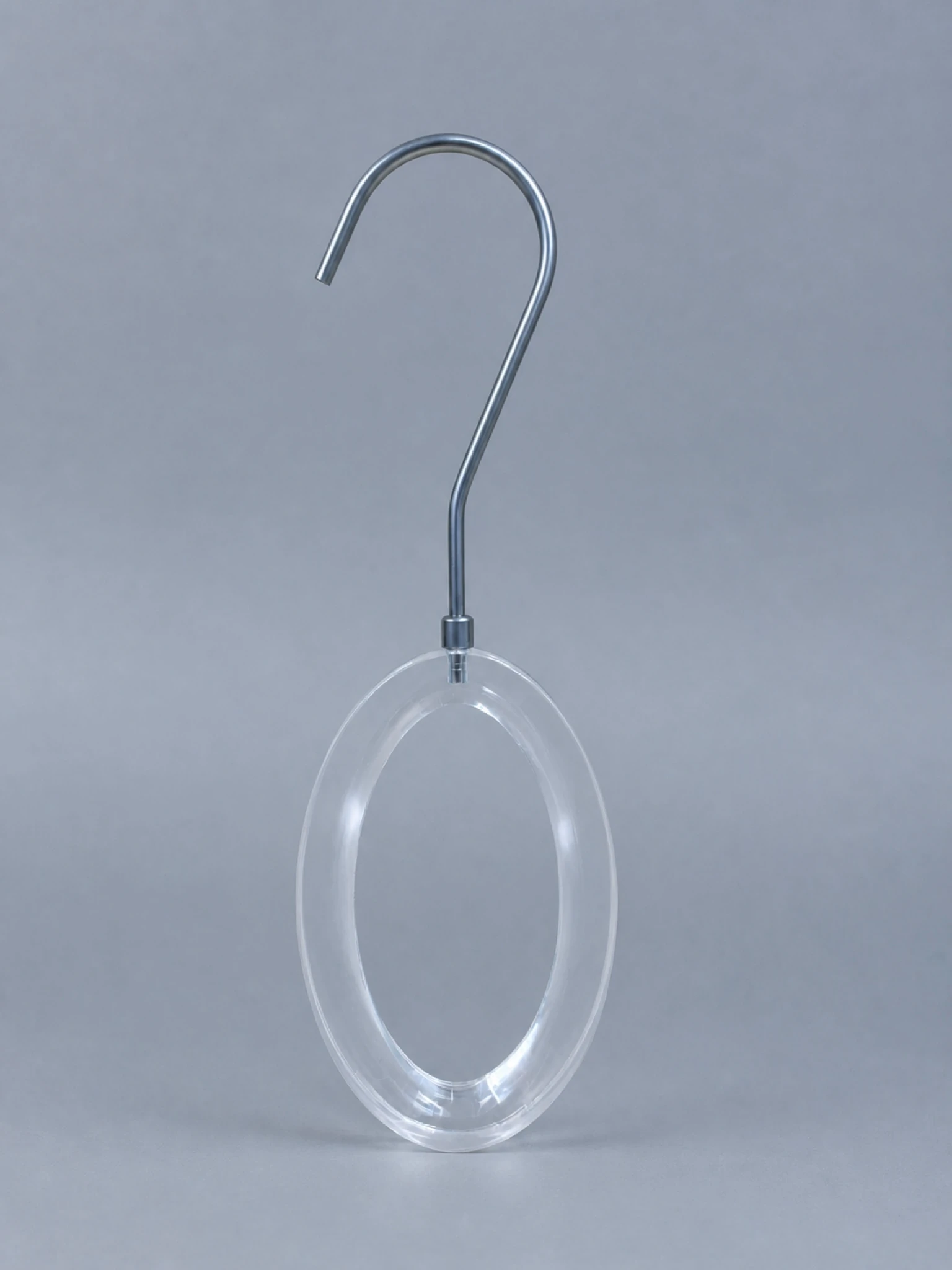
A ring can create a compact drape, but inspect the inner edge, joins and any decoration before placing fabric through it. Check whether the scarf is bunched tightly at one point or can fall with its intended volume. A broader support may suit a piece that marks or stretches under concentrated contact.
Agree the contact method with the product team, especially for delicate silk, loose weaves, fringe or embellishment. Avoid pulling the scarf through a small opening to make it fit. Use a sample to assess both installation and removal.
Our props and risers guide covers the surrounding fixture family. For a scarf support, the detailed edge and contact check matters as much as its finish.
Use forms to explain styling
A neck or torso form can show a loose loop, shoulder drape or knot. A head form can show a headscarf where the product and campaign call for it. Choose a form that lets the scarf retain enough visible pattern and length to communicate the styling.
Keep the tie reproducible. A store team should be able to reset it from a short sequence and photographs rather than reconstructing an elaborate knot. Use the display head guide to compare form types, and the pose guide when the scarf is part of a full mannequin look.
Any restraint should be approved for the fabric and form. Pins, clips or adhesives can create concentrated contact or leave marks; a form with a textile surface does not automatically make every pinning method appropriate for a sale scarf.
Build a folded layout staff can maintain
Set the fold direction, visible motif and label position for each design family. Keep enough of a border or characteristic color visible to distinguish the options. The goal is consistent recognition rather than making every print look identical.
Decide whether customers handle the folded stock directly or ask staff to open a sample. Leave room to unfold and refold without dragging the scarf over signage, hooks or rough fixture edges. Avoid stacking so much product that removing one item disrupts the entire arrangement.
Check light and contact over time
The George Washington University Museum and The Textile Museum’s textile care guidance identifies light exposure and improper display as risks to textiles, and recommends clean handling and removing jewelry that can catch threads. Its advice is written for collections care; retail teams should use product-specific instructions to set handling and display arrangements for current stock.
Review daylight on a window scarf and the hours that display lighting runs. Rotation can reduce the exposure of an individual piece, but it does not reverse fading. Do not assume a particular lighting type removes every exposure concern. The lighting guide can help assess product visibility while the garment team sets care limits.
During checks, look at the areas touching rings, bars and knots as well as the visible front. Record creasing, pulls, slipping or color transfer, and change the support or presentation if the product is being affected.
Approve the display as a small shopping journey
For an illustrative three-part layout, place a loose hero drape at the focal point, a broad print view nearby and corresponding folded options within the intended shopping zone. These are presentation roles, not a required number of stands.
Walk through the sequence with someone who did not build it. Can they identify the design, understand a way to wear it and locate the matching option? Then have a store colleague remove and replace the sample. Revise any step that requires an explanation or risks catching the fabric.
Frequently asked questions
What is the best way to display a printed scarf?
Show a recognizable part of the print and provide context for drape or styling. Combine presentations where one arrangement cannot communicate both.
Are scarf rings suitable for every fabric?
Suitability depends on the opening, edge finish, contact area and scarf construction. Trial the actual product with the product team’s approval.
Should scarves stay tightly knotted in a display?
Assess the knot, fabric and display period together. Check contact areas during the trial and choose a looser or different presentation if marks or distortion appear.
How can several scarf colors stay organized?
Use a documented fold, visible identifying detail and clear stock location. Keep a separate styled or open sample where customers need help understanding the product.
Specify the scarf and the shopping task
Share scarf dimensions, fabric details, print photographs, desired presentation, fixture measurements and quantities through XINTU’s contact page. Include both customer handling and staff resetting in the sample review so the display works beyond the first photograph.