
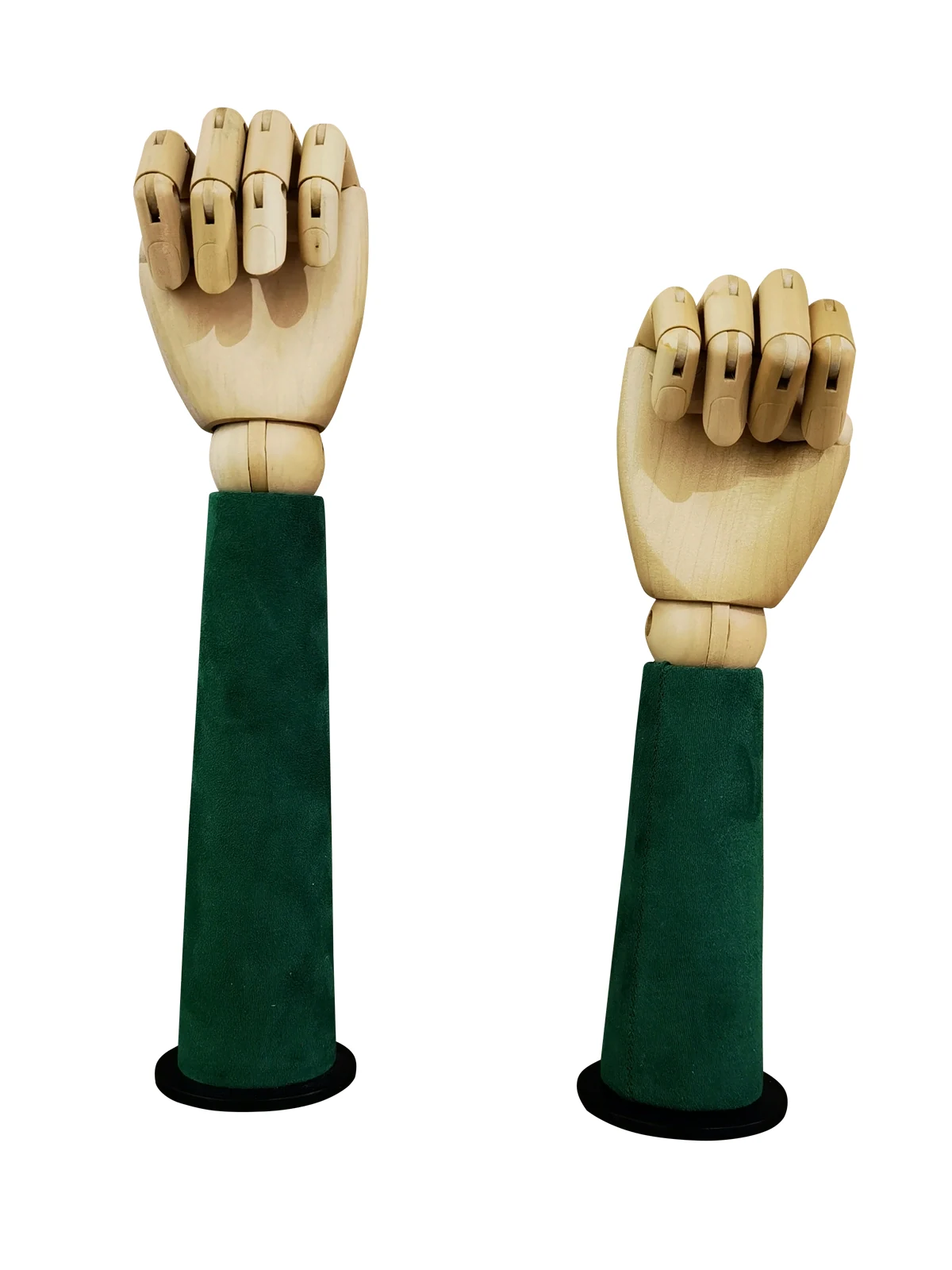
Handpräsentationsständer: Zur Präsentation von Ringen, Armbändern und Uhren
Wählen Sie Handpräsentationsständer für Ringe, Armbänder und Uhren nach Fingermittelpunktabstand, Handgelenksgröße, Oberflächenfinish und Ladengestaltung – mit einer praktischen Muster-Checkliste.
A hand display stand should be chosen around the pieces it will wear: ring sizes, bracelet and watch fit, and how customers view the counter. Confirm finger spacing, wrist size and surface finish with real stock before ordering, then plan how the hands sit within the wider jewelry display.
Hands give jewelry scale and context. A ring on a finger or a watch on a wrist is easier to read than the same piece lying in a tray. But a hand that is the wrong size, pose or finish can make good pieces look awkward. This guide works through the decisions in order.
Wichtige Erkenntnisse
- Size hands from the smallest and largest rings, watches and bangles you stock.
- Separated fingers suit ring placement; a resting pose suits bracelets and watches viewed from above.
- Choose the finish against your metals and stones, under counter lighting.
- Combine hands with busts, trays and risers so each piece has its own space.
- Check base stability on the real counter and agree a cleaning method with the supplier.
- XINTU reference: hand stand and bust dimensions confirmed per order; MOQ 10 pcs; samples typically 1–3 weeks.
1. List what each hand will display
Start with the merchandise, not the fixture. Group pieces by how they are worn:
- Rings: single statement rings, stacked rings, or sets across several fingers.
- Bracelets and bangles: rigid bangles need a hand and wrist that let them slide on; soft chains need a surface that stops them slipping off.
- Watches: the strap or bracelet must close around the wrist without straining the clasp.
- Gloves and small accessories: the hand shape must suit the glove size and cut.
Note the largest and smallest sizes in each group. These define the hand dimensions you need, and may mean more than one hand size across the range.
2. Check finger spacing and pose
Finger position decides which pieces can be shown. Slightly separated fingers make it easier to place and remove rings and to show stacks; closed fingers create a more sculptural shape but limit ring placement. An upright hand presents the back of the hand and its rings toward the customer; a reclined or resting hand suits bracelets and watches viewed from above.
Internationally, ring sizes are defined by ISO 8653:2016, which designates a ring by its inner circumference in millimetres. Recording your stock range in ISO sizes makes it easier to brief a supplier on finger dimensions.
Test placement with real rings at the sizes you stock. Staff should be able to put pieces on and take them off without forcing them, which protects both the jewelry and the stand finish.
3. Size the wrist for bracelets and watches
The wrist determines whether bangles slide on and whether watch straps close naturally. A wrist that is too thick pushes straps to the last holes or blocks bangles altogether; one that is too thin lets pieces hang loosely and twist out of view. Measure a representative selection of your straps and bangles, and confirm the wrist dimensions with the supplier before ordering.
Because jewelry ranges differ so much, dimensions for our Holz-Hand-Ausstellungsständer are confirmed per order rather than fixed: send us your ring, bangle and watch ranges and the cabinet height, and we size the hand and base to suit.
A longer forearm section gives room to stack several bracelets and keeps the hand visible in a deep cabinet. A shorter stand suits shallow counters and open tables.
4. Choose the finish around the metals and stones
The hand surface is the background to every piece:
- Natural wood brings warmth and a crafted feel, and suits gold, rose gold and natural materials. Our Holz-Hand-Ausstellungsständer is an example.
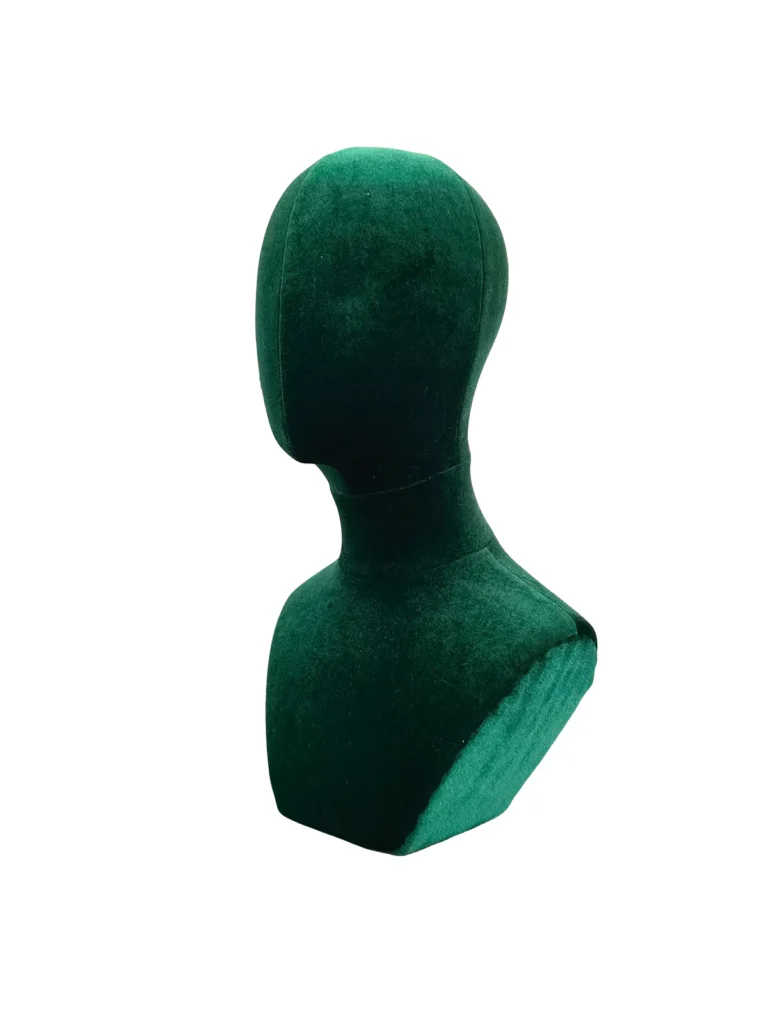
- Velvet or suede covers add softness and help chains stay in place; deep colors make metals and stones stand out. Our Samt-Mannequin-Führer explains how pile and color behave under light.
- Matte painted finishes in white, black or brand colors give a clean, graphic look.
- Gloss and acrylic finishes feel contemporary but show fingerprints and reflections more readily.
Approve the finish under counter lighting with real pieces in place. A finish that looks right in daylight can produce glare or lose contrast under focused spotlights; our Leitfaden für die Beleuchtung von Einzelhandelsdisplays covers how to check this.
5. Build hands into a complete jewelry display
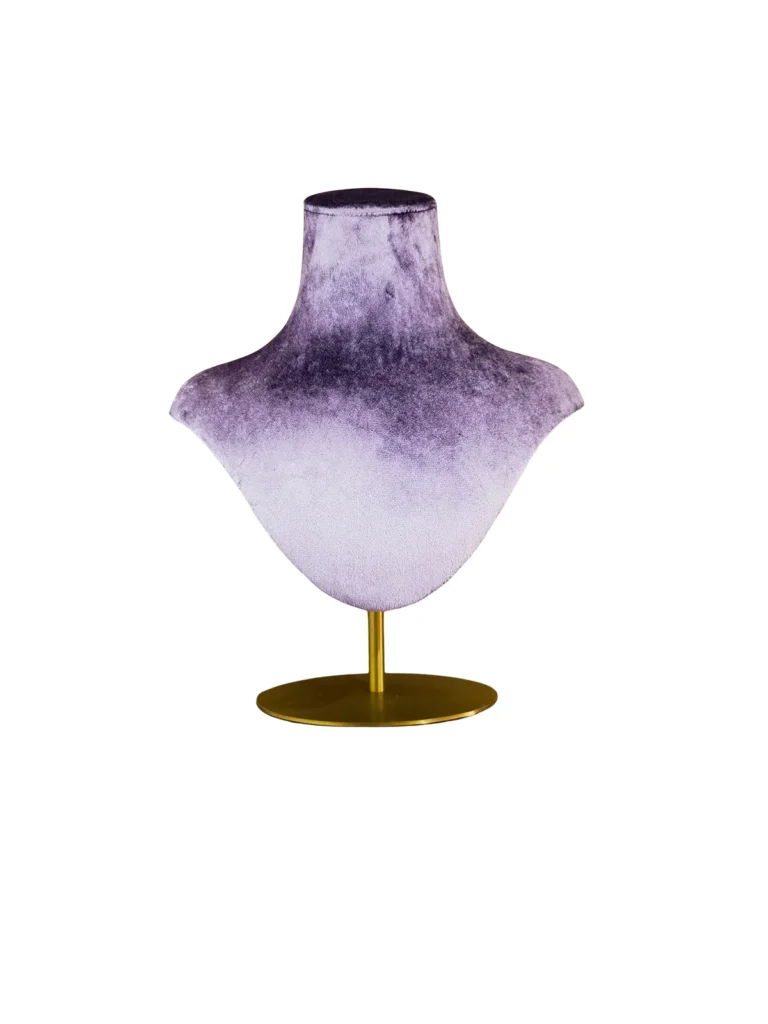
Hands rarely work alone. Combine them with busts for necklaces, trays for loose pieces and risers for height. A typical counter story might place a velvet necklace bust at the back, a hand in the middle and smaller pieces at the front.
- Keep finishes consistent across the set, or vary them deliberately.
- Use height changes so the hand is not hidden behind a bust.
- Leave space around each statement piece rather than filling every finger.
- Group by collection or occasion so customers can see what belongs together.
Unser necklace display bust guide und Halterungen und Ständer-Anleitung help you plan the rest of the counter. For other accessories, see our guides to eyewear display stands, handbag display stands und scarf display ideas.
6. Plan for security, handling and cleaning
Hands sit within customers’ reach, so agree how valuable pieces are secured and who handles them. Check that the base is stable on the counter surface and that the stand will not tip when a customer lifts a bracelet. Weighted or wider bases help on open tables.
Fingerprints, dust and skin oils show quickly on dark and glossy finishes. Agree a cleaning routine suited to the finish, and avoid chemical cleaners that may damage wood, fabric or paint. Our fabric cleaning guide covers covered surfaces.
Keep stand cleaning separate from jewelry care. The Gemological Institute of America recommends cleaning jewelry gently with warm water, mild soap and a soft brush, and warns that household cleaners can damage precious metals and delicate gems (GIA: Tips on Caring for Jewelry).
Order terms for hand stands and busts
Our hand stands and necklace display busts share the same terms. Overall height, form, finish and base are confirmed per order to fit your counters and cabinets.
Order terms (from our product pages): MOQ is 10 pcs per style; pre-production samples are typically ready in 1–3 weeks; size, fabric, color, arms, base and branding can be customized; bulk orders ship by sea freight in export cartons, with air freight available for urgent samples. Pricing depends on size, material, finish and quantity.
A sample approval checklist
- Smallest and largest ring sizes placed and removed without force.
- Representative watches close comfortably; bangles slide on and off.
- Finish checked under counter lighting with gold, silver and stone pieces.
- Stand height suits the cabinet or counter depth.
- Base stable on the real counter surface.
- Cleaning method confirmed with the supplier.
Häufig gestellte Fragen
Brauche ich mehr als eine Handschuhgröße?
Often, if you stock a wide range of ring sizes or both men’s and women’s watches. Check the extremes of your range before deciding.
Welche Oberflächenbehandlung eignet sich am besten für Goldschmuck?
Naturholz, tiefes Samt und dunkle Mattlacke bieten Gold in der Regel einen guten Kontrast. Stimmen Sie die Auswahl unter Berücksichtigung Ihrer tatsächlichen Lichtverhältnisse ab.
Can hand stands be produced in brand colors?
Painted and fabric-covered hands can often be made in custom colors. Approve a physical sample with real pieces before production.
What is the MOQ for hand display stands?
At XINTU the MOQ is 10 pcs. Dimensions, material, finish and branding are confirmed per order, and samples are typically ready in 1–3 weeks.
Plan your jewelry display with XINTU
Send us the ring sizes, watch and bracelet ranges and counter dimensions you are working with, and we can suggest hand, bust and head combinations to sample together. Visit our custom display service oder get in touch with our team.