
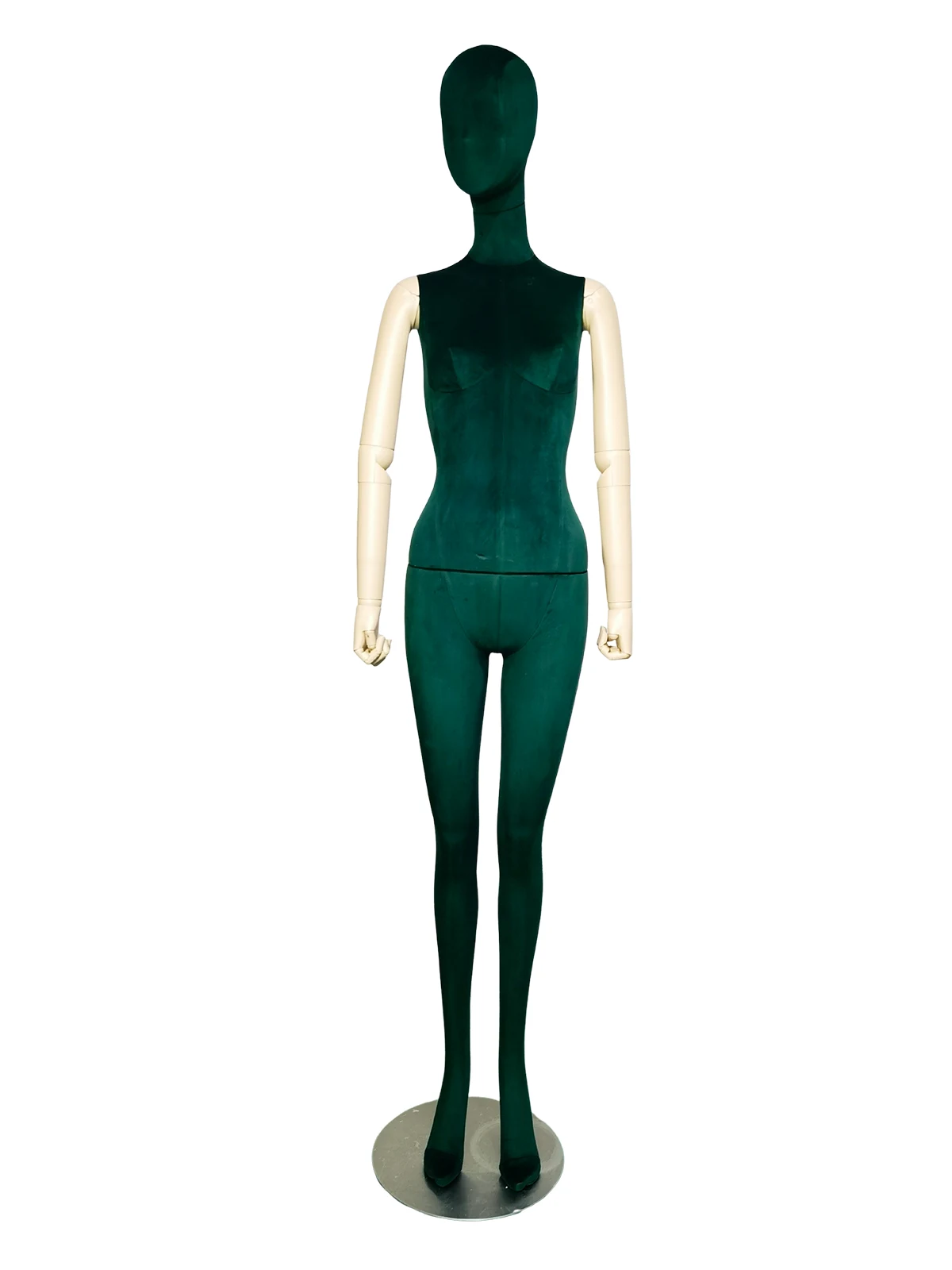
Custom Mannequin Finishes: Paint, Fabric & Hardware
Explore paint, fabric, hardware and texture options for custom mannequins, plus the decisions that keep a collection visually consistent.
Custom mannequin finishes translate a brand concept into a physical retail object. Color, sheen, texture, textile and hardware can make the same body shape feel minimal, luxurious, playful or technical. The strongest results come from treating the finish as a coordinated specification rather than choosing isolated decorative effects.
Begin with the store environment
Finishes should be reviewed in relation to flooring, walls, lighting, fixtures and garments. A high-gloss surface may create dramatic reflections in a window but feel distracting under bright interior lighting. A natural linen texture may support a quiet premium concept but require more careful protection from handling.
Share store photographs, material boards and lighting information with the manufacturer. A complete context helps the sample team interpret the desired effect more accurately.
Painted finishes
Paint offers broad color flexibility and can be applied in matte, satin, gloss, metallic or special-effect systems. Matte finishes reduce reflections and work well for abstract forms. Satin adds a controlled sheen. Gloss emphasizes shape but can reveal surface imperfections and fingerprints more easily.
Color should be approved using a recognized reference plus a physical sample. Even when a color code is supplied, substrate, coating system and sheen can change the perceived result. For multi-store programs, record the approved sample and viewing conditions.
Fabric and upholstered surfaces
Fabric creates visible texture and a softer relationship with garments. Linen and cotton can feel natural and restrained, while velvet adds depth and richness. Stretch, seam placement, pile direction and batch variation all affect consistency across a collection.
Textile finishes also change maintenance requirements. Stores need guidance for dust removal, spot cleaning and handling. Replacement fabric should be reserved or carefully matched if long-term consistency is important.
Wood and metal hardware
Neck caps, arms, hands, bases and connection details often provide the visual accent. Natural beech, stained wood, brass-tone metal, chrome and powder-coated finishes can each reinforce a different brand direction. Hardware should be reviewed for color, grain, sheen, dimensions and how it meets the body surface.
Texture and decorative treatments
Special textures, gradients, graphics and hand-applied effects can create distinctive displays, but they require clear control samples. Hand-finishing may naturally introduce variation. Decide in advance which differences are acceptable and which details must remain tightly matched.
Build a finish specification
- Body color reference and approved physical sample
- Sheen level and surface texture
- Fabric supplier, code, color and seam direction
- Wood species, stain and grain expectations
- Metal finish and coating method
- Acceptable variation and inspection lighting
- Cleaning, touch-up and replacement guidance
Sample before bulk production
A finish can look different on a small swatch and a full mannequin. Approve a complete sample whenever color, fabric placement or hardware coordination is important. Photograph the approved sample, label every component and include the final decisions in the production file.
For international rollouts, also test packing protection. Fabric can be compressed, gloss surfaces can rub and metallic parts can mark adjacent components if they are not separated correctly.
Consistency makes customization valuable
The purpose of customization is not complexity for its own sake. It is to create a repeatable display language that strengthens the garments and the store. A disciplined finish specification makes that language easier to reproduce across samples, production and future reorders.
Before approval, ask store operations to handle the sample as they would during a real changeover. Dressing, assembly and cleaning tests often reveal practical issues that are easy to miss during a visual review alone. Resolving them at sample stage protects both appearance and day-to-day usability across every store location and future replacement order.
View XINTU Display’s product collection or contact us to develop a finish sample for your mannequin project.