Custom Mannequin Manufacturing: MOQ, Samples & Lead Times
A B2B guide to custom mannequin manufacturing: how MOQ, sampling, lead times and OEM vs ODM work, and what to prepare before requesting a quote.
Custom mannequin manufacturing turns a brand brief into finished display forms — but the process, costs and timelines are not always clear to first-time buyers. Understanding MOQ, sampling, lead times and the difference between OEM and ODM helps you plan orders, budget accurately and avoid surprises. This guide walks B2B buyers through how custom mannequin manufacturing works and what to prepare before requesting a quote.
How custom mannequin manufacturing works
A typical project moves through a few clear stages: brief and quotation, sample or prototype, approval, bulk production, quality control and packing, then shipping. You share references, sizes and finish requirements; the factory quotes price, MOQ and lead time; a sample is made and approved; and only then does bulk production begin. Building in time for the sample stage is the single biggest thing buyers can do to protect quality. For help choosing a partner, see our guide on how to choose a custom mannequin manufacturer.
Minimum order quantity (MOQ)
MOQ is the smallest quantity a factory will produce for a custom order. It varies with the design, finish and level of customisation: simple fabric-covered forms often have a lower MOQ than fully bespoke sculpts with custom moulds. New moulds add tooling cost, which is why highly custom shapes carry a higher MOQ. If your first order is small, ask about shared moulds, stock body shapes with custom finishes, or a sample order to test the market before scaling.
Samples and pre-production approval
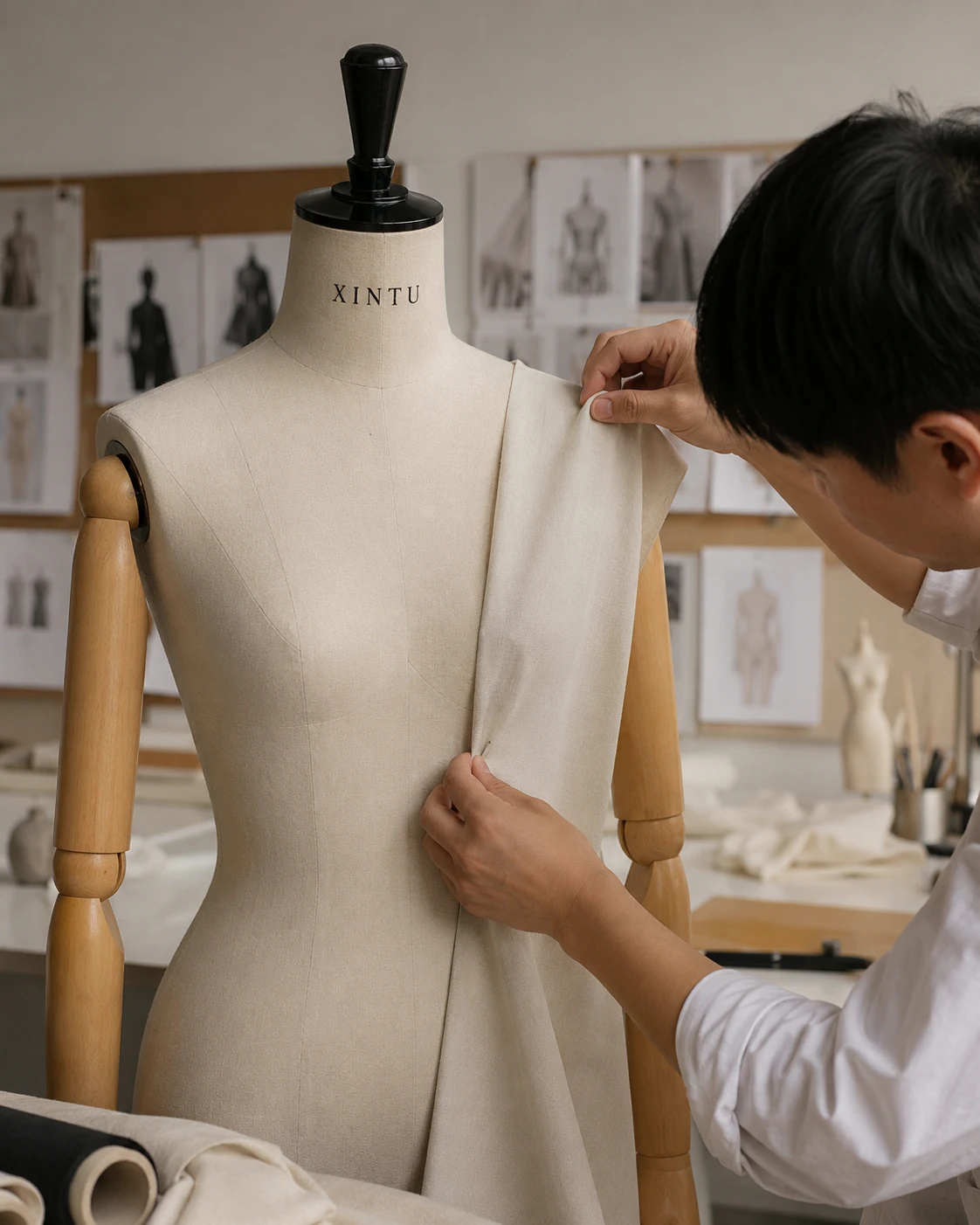
A sample, or pre-production prototype, lets you check proportions, fabric, colour, base and branding before committing to bulk. Expect a sample fee and a separate lead time. Approve the sample in writing, keep a reference photo, and confirm details such as fabric batch and Pantone colour so the bulk run matches. Skipping the sample to save time is the most common cause of costly reworks.
Lead times: what to expect
Lead time depends on quantity, complexity and season. As a rough guide, samples take one to three weeks and bulk production several weeks after approval, with sea freight adding transit time on top. Peak periods before major retail seasons run longer, so place custom orders early. Always confirm the current lead time in writing at the quotation stage, and factor in international shipping and packaging.
OEM vs ODM: which model fits you
OEM (original equipment manufacturer) means the factory builds to your own design and specifications — best when you have a defined mannequin design or exact requirements. ODM (original design manufacturer) means you adapt the factory’s existing designs with your finishes and branding — faster and lower-cost when you do not need a fully bespoke form. Many brands start with ODM to launch quickly, then move to OEM as volumes grow.
What to prepare before requesting a quote
- Reference images or drawings of the mannequin style you want
- Body type and gender (full-body, half-body, torso, male or female)
- Sizes and proportions, or the target garments
- Finish: fabric type and colour, or fiberglass
- Arm, base and branding requirements
- Target quantity, delivery date, and destination port or country
Frequently asked questions
What is the MOQ for custom mannequins?
MOQ depends on the design and level of customisation. Simple fabric-covered forms usually have a lower MOQ than fully bespoke sculpts that need new moulds. Share your design and quantity to get an exact figure.
How long does custom mannequin manufacturing take?
As a rough guide, samples take one to three weeks and bulk production several weeks after sample approval, plus shipping time. Complex designs and peak seasons take longer, so order early.
What is the difference between OEM and ODM mannequins?
OEM means the factory builds to your own design and specifications, while ODM means you adapt the factory’s existing designs with your finishes and branding. ODM is faster and lower-cost; OEM offers full customisation.
Do I need to order a sample first?
A sample is strongly recommended. It lets you approve proportions, fabric, colour and branding before bulk production, which prevents costly reworks. Expect a sample fee and a short additional lead time.
What information do I need to get an accurate quote?
Provide reference images, body type, sizes or target garments, finish, arm and base details, branding, target quantity and delivery date. The more detail you share, the more accurate the price, MOQ and lead time.
Ready to start a custom mannequin project? XINTU is a custom mannequin manufacturer in China supporting fashion brands, boutiques and retailers with OEM and ODM production, sampling and worldwide shipping. Share your design, quantity and target date for a quote and lead time. Contact us.