
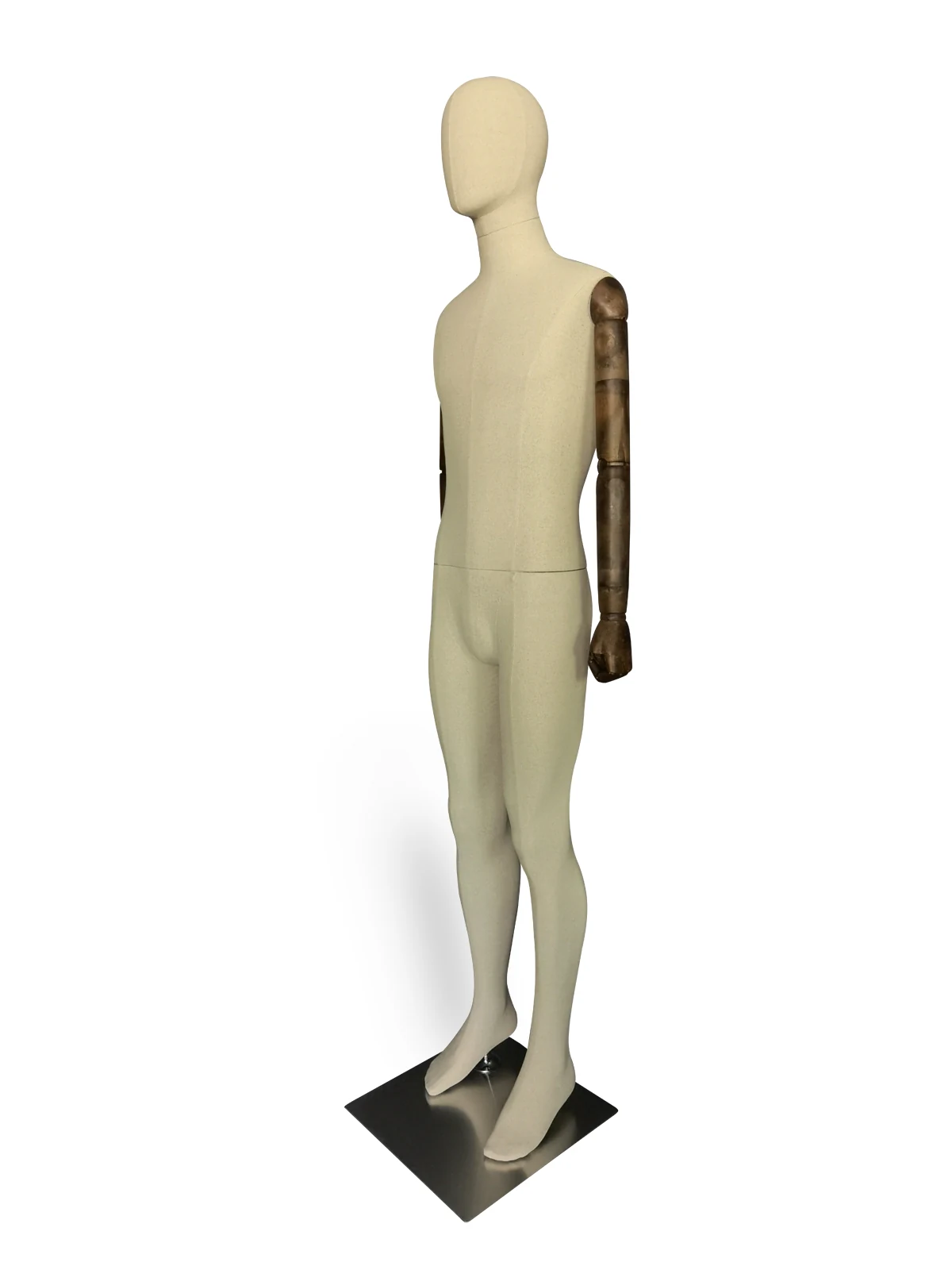
Mannequin Size Guide for Garment Fit & Store Planning
Use this mannequin size guide to evaluate proportions, garment fit, spacing and consistency before ordering displays for your stores.
A practical mannequin size guide must connect body measurements with garments, poses and store space. Standard labels such as small, medium or size 8 are not enough because brands use different fit models and mannequin shapes. Buyers should compare actual dimensions and test representative clothing before approving an order.
Measurements that matter
- Height: overall presence and relationship with fixtures
- Bust or chest: fit through jackets, dresses and tops
- Waist and hip: fit for trousers, skirts and fitted garments
- Shoulder width: drape and sleeve position
- Inseam and leg shape: trouser length and footwear styling
- Foot size: compatibility with the brand’s sample shoes
- Base footprint: floor area and spacing between figures
Use your garment measurements
Compare the mannequin with finished garment measurements, not only the customer’s nominal size. Clothing needs enough ease to pass over shoulders, hands, hips and feet during dressing. Structured garments may require a closer match, while oversized collections can work across a broader range of body forms.
Select several representative products for testing: a fitted jacket, slim trouser, long-sleeve top, dress and footwear sample. This small test wardrobe reveals more than a spreadsheet alone.
Consider body posture
Two mannequins with similar measurements can dress differently if one has a curved torso, raised shoulder, bent leg or rotated waist. Pose changes how fabric falls and where tension appears. Review measurements together with front, side and back photographs.
Allow for dressing access
Hands and arms can be wider than sleeve openings, and feet can be difficult to pass through narrow trousers. Detachable parts and practical joint positions reduce the force required during changes. Ask store staff to dress the sample; they will often notice access issues that are not obvious during product selection.
Plan groups, not isolated figures
A mannequin rarely stands alone. Map groups at scale, including bases, plinths and walking paths. Dynamic poses may extend beyond the nominal body width. Seated figures need suitable furniture. Children’s and adult figures should form a balanced visual family without creating awkward height conflicts.
Maintain consistency across stores
For a rollout, create an approved measurement sheet for every model. Record body dimensions, pose, joint type, base size and finish. Avoid relying only on product names, because similar names may hide important specification differences.
When customization is useful
Customization may be appropriate when the core collection repeatedly fails to fit standard forms, when a distinctive proportion is part of the brand identity or when existing figures waste too much floor space. In many cases, an existing body with adjusted finish or hardware is more efficient than developing a completely new sculpture.
Sample approval checklist
- Verify every dimension against the specification.
- Dress the sample in several garment categories.
- Check views from the front, side and customer approach.
- Test assembly, stability and garment changes.
- Confirm the base fits the planned floor layout.
- Photograph and label the approved configuration.
Turn dimensions into a reliable display system
The goal is not to find a universally correct mannequin size. It is to create a dependable relationship between body form, garments and space. Once that relationship is documented, reorders and store planning become much easier.
Keep the approved sample available when the first bulk units arrive. Measure a small selection from different cartons and repeat the garment fitting test. Early inspection confirms that the production run matches the dimensions and usability agreed during development.
A size record is also useful when campaigns change. Visual teams can check new samples against existing figures before shipping garments to every store, reducing emergency alterations during installation and keeping campaign changeovers more predictable.
Browse our product collection or contact XINTU Display with your garment measurements and store plan.