
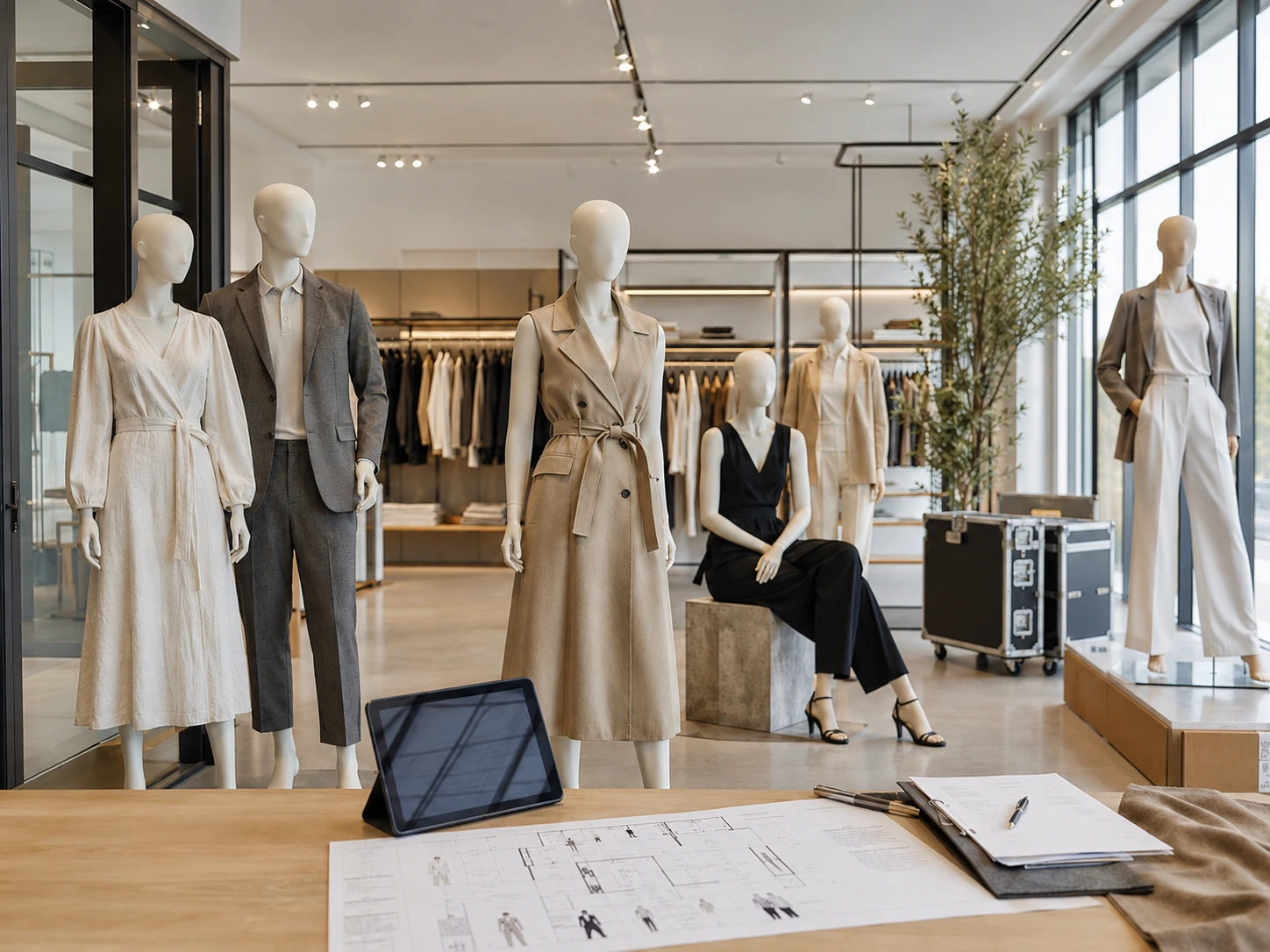
Planning Mannequin Quantities for Seasonal Retail Displays
Ordering mannequins for a seasonal rollout requires a balance between creative ambition, floor space, logistics and budget. A clear quantity plan helps every store launch consistently while avoiding unused figures in storage.
Begin with display roles
List the roles each store needs: window heroes, entrance statements, department focal points, table companions and torso forms for accessories or knitwear. Counting roles is more reliable than applying one ratio to every store because formats and traffic patterns differ.
Create store tiers
Group locations by size and visual-merchandising priority. A flagship may need several complete stories, while a compact branch may require one window group and two interior focal points. Define a standard kit for each tier so allocation remains simple.
Plan for the collection mix
Review how many distinct silhouettes must be shown. Tailoring, dresses, sportswear and childrenswear may need different body types, poses or forms. Interchangeable heads, arms and bases can extend the usefulness of a core fleet without multiplying complete units.
Add operational spares
Include a controlled number of replacement hands, fittings and complete bodies for high-volume programs. Spares reduce downtime when a component is damaged and allow the visual team to respond to late campaign changes. Record compatible parts so replacements can be deployed quickly.
Check storage and transport
Confirm where figures will be stored between seasons and how often they will move. Detachable limbs, wheeled cases and standardized bases simplify handling. Packaging dimensions can affect freight costs as much as the unit quantity, especially across multiple regions.
Build the order in phases
- Approve the visual concept with sample units.
- Confirm store tiers and exact display roles.
- Validate poses with garments from the real collection.
- Finalize spares, packaging and labeling.
- Schedule delivery around installation dates.
A disciplined quantity plan turns mannequins into a reusable retail system. It gives creative teams enough flexibility while keeping purchasing, storage and rollout costs predictable.