
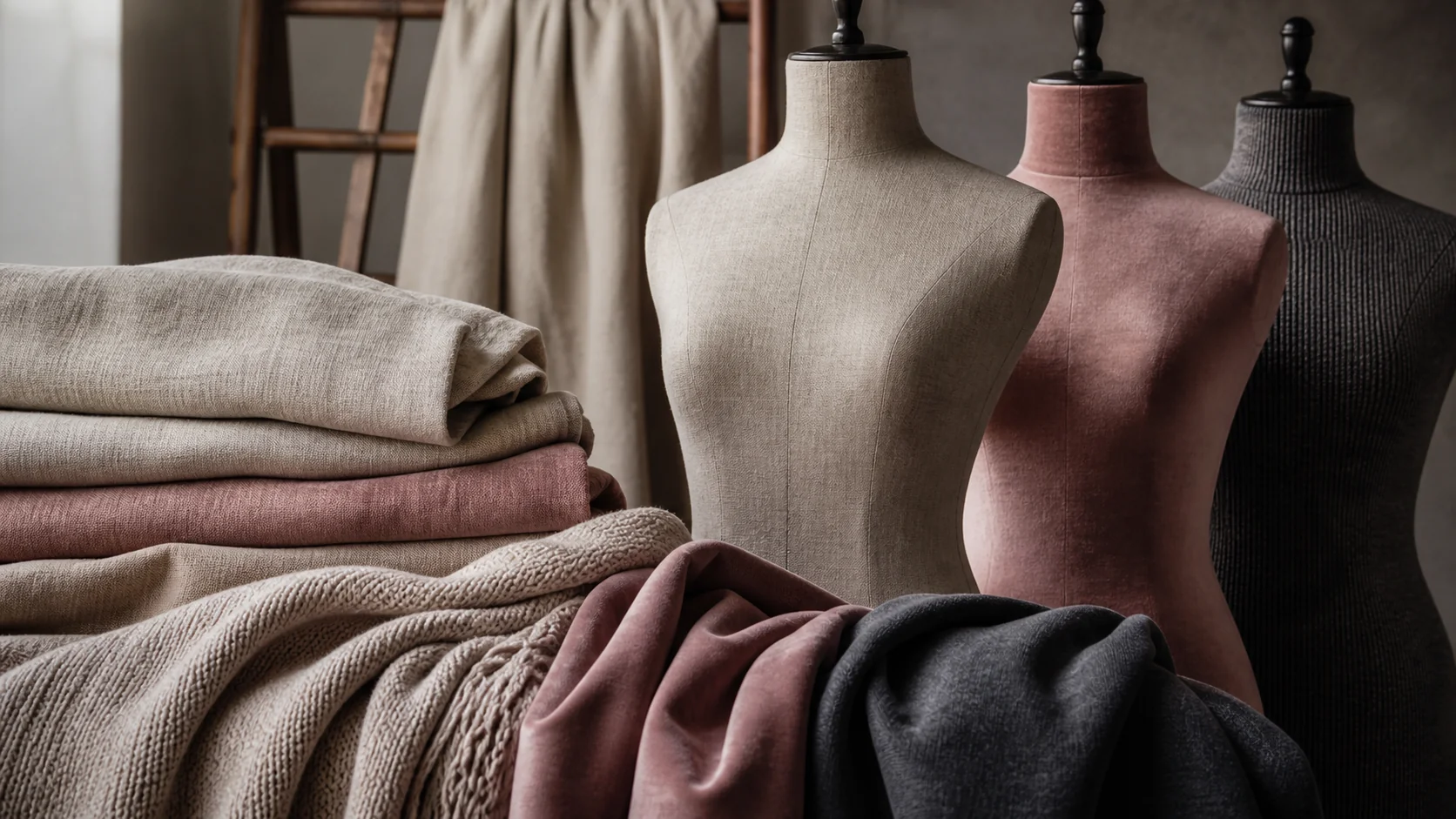
Dress Form Fabrics: Texture, Color & Performance Guide
The fabric covering on a dress form changes how garments are perceived and how the form performs in daily use. Texture, color, stretch and durability should be selected together rather than treated as purely decorative choices.
Start with the intended use
A tailoring form used for pinning needs a practical, resilient surface. A retail display form may prioritize refined texture and color harmony. Photography studios often prefer neutral, low-contrast coverings that do not distract from the garment.
Linen and linen-look fabrics
Linen offers a natural, premium character and works well with contemporary, heritage and sustainable brand stories. Its visible weave adds warmth, although highly textured versions may compete with delicate garments or create moiré in photography.
Velvet and soft-touch finishes
Velvet creates depth and luxury, especially in jewelry, eveningwear and boutique displays. Directional pile changes with light and touch, so the covering must be applied consistently. Dark velvet can also show lint and may require more maintenance.
Knit and stretch coverings
Stretch fabrics conform smoothly to shaped bodies and reduce wrinkling around curves. Their elasticity must be controlled so seams remain straight and the surface does not become shiny over time. Dense knits generally provide better coverage than thin jersey.
Choose color strategically
Oatmeal, warm gray and charcoal are versatile because they support many collections. Pale colors keep the form visually light; darker tones create contrast and drama. Test the fabric beside actual garments and under store lighting before approval.
Evaluate practical performance
- Check resistance to snagging and pilling.
- Confirm whether pins will be used repeatedly.
- Test seam visibility across curved areas.
- Review colorfastness and cleaning requirements.
- Approve texture under both retail and photographic lighting.
The right covering supports the brand without overpowering the product. A well-chosen fabric makes a dress form feel intentional, tactile and durable throughout repeated seasonal use.