
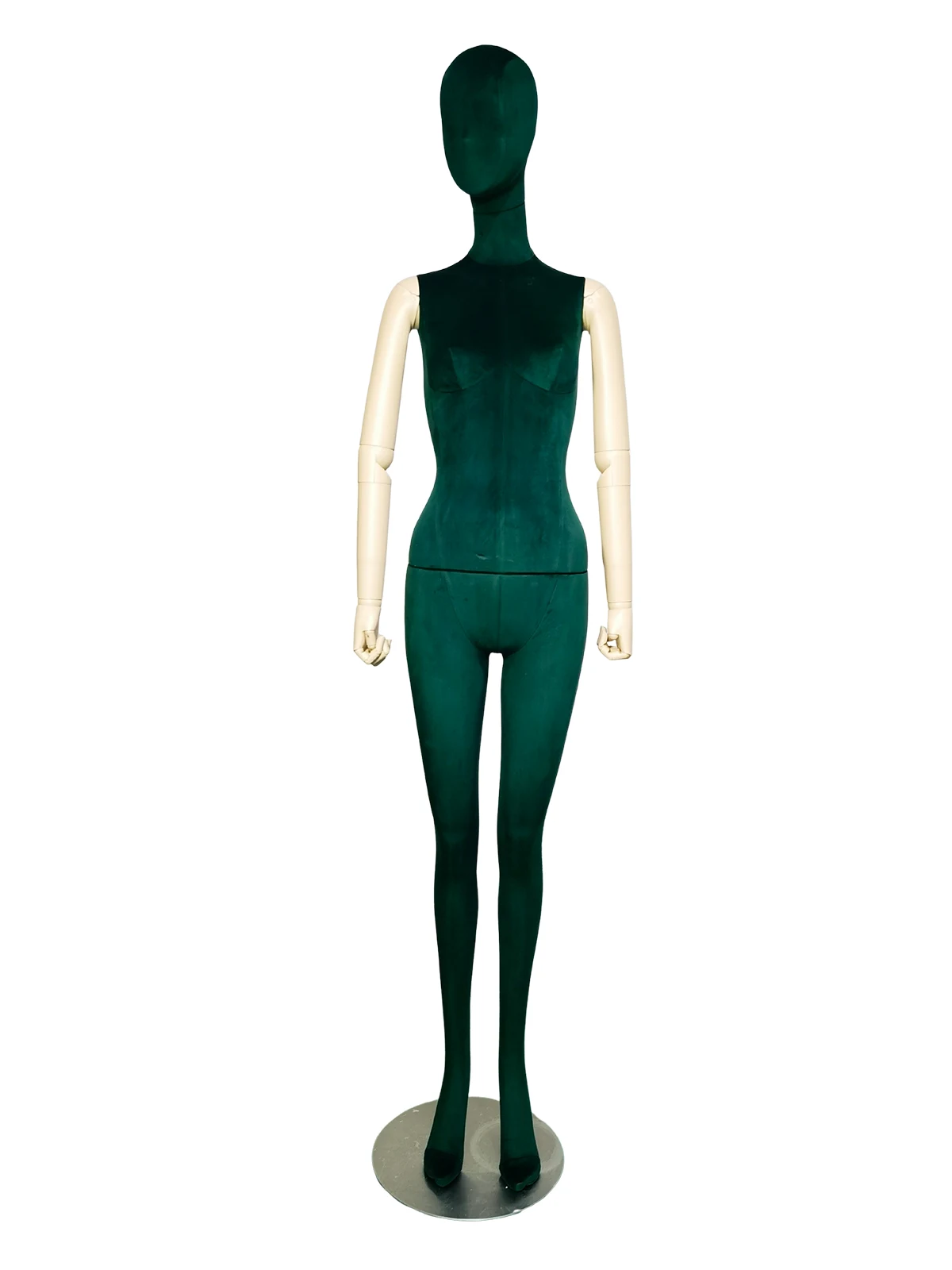
Fabric-Covered vs Fiberglass Mannequins: Which to Choose
Fabric-covered vs fiberglass mannequins compared — look, styling, durability, brand fit and cost, to help you choose for your retail displays.
One of the first decisions when sourcing mannequins is the surface: fabric-covered or fiberglass. Both display garments well, but they create very different impressions. Here’s a clear comparison to help you choose.
The short answer
Choose fabric-covered mannequins for a soft, premium, brand-led look and easier styling; choose fiberglass mannequins for a sleek, glossy, high-contrast look and lower unit cost. Many premium and boutique retailers prefer fabric-covered forms.
Look and feel
Fabric-covered mannequins are wrapped in linen, velvet or other textiles for a warm, tactile, understated finish that keeps attention on the garment. Fiberglass mannequins have a hard, glossy or matte surface with a more graphic, mannequin-forward look.
Styling and pinning
Fabric surfaces make pinning, tucking and styling easier — useful for tailoring and detailed merchandising. Pinning into fiberglass is not possible, so garments are dressed rather than pinned.
Durability and maintenance
Fiberglass is hard-wearing and easy to wipe clean but can chip. Fabric-covered forms resist chipping and hide small marks, though the textile should be kept clean; both last well with proper care.
Brand fit
Fabric-covered mannequins suit premium, luxury, designer and boutique brands that want a crafted feel. Fiberglass suits fast-fashion, sportswear and high-contrast concept displays.
Cost
Fiberglass typically has a lower unit price; fabric-covered forms cost more but deliver a higher-end presentation and strong brand value. Custom options affect pricing on both.
Quick comparison
- Look: fabric = soft/premium | fiberglass = sleek/glossy
- Pinning: fabric = yes | fiberglass = no
- Best for: fabric = luxury/boutique | fiberglass = fast-fashion/concept
- Cost: fabric = higher | fiberglass = lower
Frequently asked questions
Are fabric-covered mannequins better than fiberglass?
Neither is universally better — it depends on your brand. Fabric-covered mannequins give a soft, premium look and easier styling; fiberglass gives a sleek, glossy look at a lower unit cost. Premium and boutique brands often prefer fabric-covered.
Can you pin garments to a fabric-covered mannequin?
Yes. Fabric surfaces allow pinning, tucking and detailed styling, which is harder or impossible with fiberglass.
Which is more durable, fabric or fiberglass?
Fiberglass is hard-wearing but can chip; fabric-covered forms resist chipping and hide small marks. Both last well with proper care.
Are fabric-covered mannequins more expensive?
Usually yes — they cost more than basic fiberglass but deliver a higher-end presentation and stronger brand value. Customisation affects pricing on both.
Which mannequin type suits luxury retail?
Fabric-covered mannequins in linen or velvet are typically preferred for luxury, designer and boutique retail for their crafted, premium feel.
Looking for custom fabric-covered mannequins?
XINTU is a custom mannequin manufacturer in China specialising in fabric-covered mannequins for fashion brands, boutiques and retailers worldwide. Share your requirements for a quote and project support. Contact us.