
How to Choose Retail Mannequins for Your Fashion Brand
A practical guide to choosing retail mannequins by brand image, garment category, pose, finish, durability and store requirements.
Knowing how to choose retail mannequins is easier when the decision begins with garments and store operations rather than appearance alone. The right mannequin should support the brand image, fit the clothing category, work within the available floor space and remain practical for staff to dress and maintain.
Define the role of the mannequin
Start by identifying where each figure will be used. Window displays need strong silhouettes that read from a distance. Interior mannequins may need compact poses and easy garment changes. Showrooms often benefit from neutral forms that let buyers focus on the collection. A single store can require several types, but every type should have a clear job.
Match the brand’s visual language
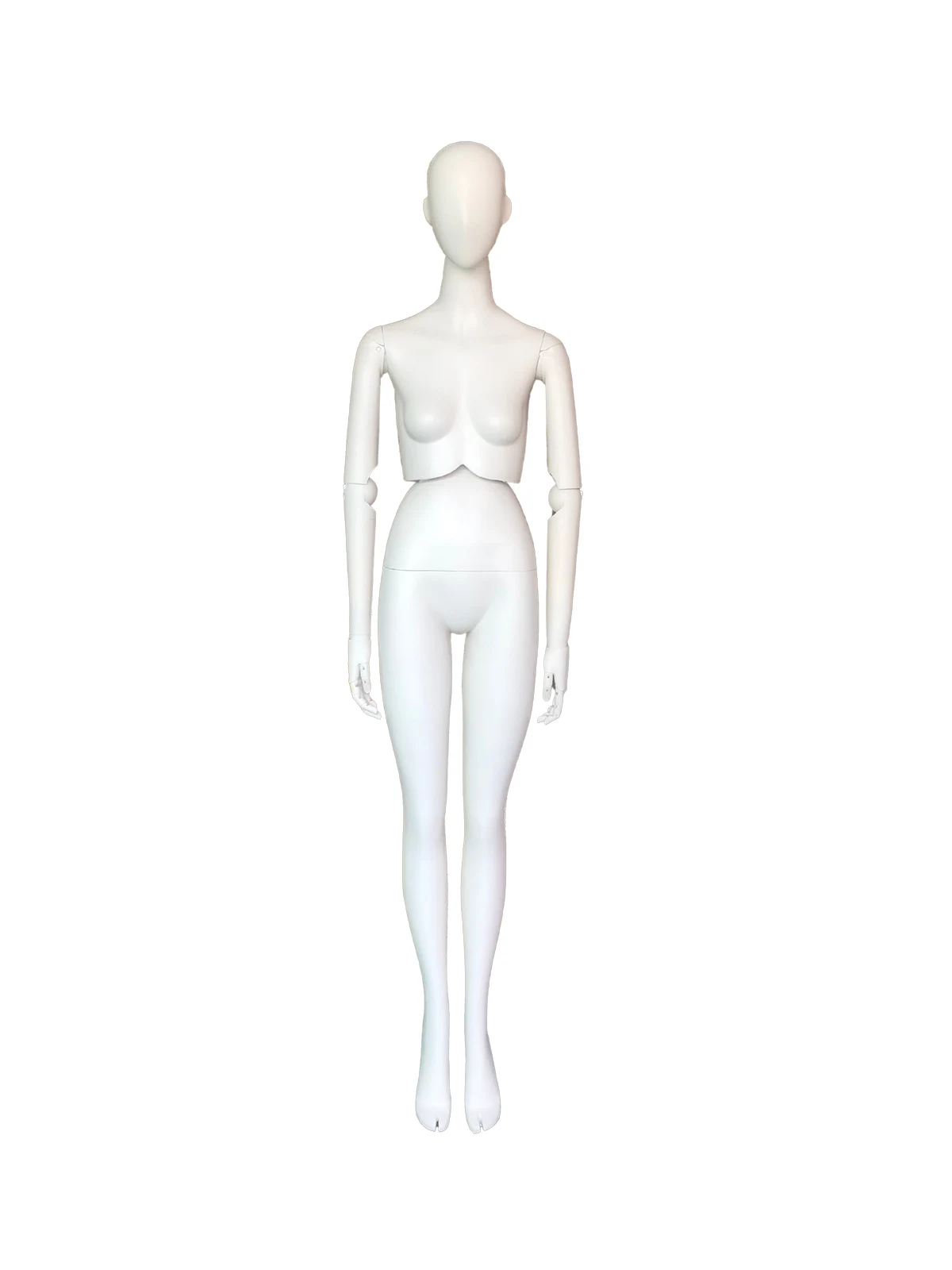
Realistic faces create a different relationship with customers than abstract or headless forms. Matte white can feel clean and architectural, while fabric, custom colors and natural wood details add warmth or character. Use the store concept, campaign imagery and customer profile to define the desired expression before reviewing catalog options.
Choose proportions around the garments
A visually attractive figure is not useful if the collection does not fit. Compare bust, waist, hip, shoulder, chest and inseam measurements with the brand’s core garment sizes. Consider footwear, sleeve length, trouser shape and whether layered styling is common. For tailored pieces, shoulder slope and torso posture can be as important as basic measurements.
Select poses that help the merchandise
Dynamic poses create energy but can make dressing more difficult and require more space. Straight poses are versatile and easier to repeat across stores. Seated figures add variety but need coordinated plinths or furniture. Review the pose from several angles and confirm that arms, hands and legs do not hide key garment details.
Review joints and dressing access
Ask how arms, hands, waist and legs connect. Store staff should be able to assemble the mannequin safely without placing stress on fragile points. Magnetic fittings, detachable hands and rotatable waists can improve dressing efficiency when they are correctly engineered for the intended use.
Compare materials and finishes
Fiberglass supports detailed shapes and many painted finishes. Fabric-covered forms create a tactile presentation. Mixed wood, metal and textile details can reinforce a premium concept. Compare surface durability, cleaning needs, handling requirements and repair options as well as appearance.
Plan the base and footprint
Measure the actual display area, including circulation paths. Glass, metal and painted bases offer different visual effects and stability. Confirm base dimensions, support method and compatibility with footwear. A mannequin that fits the garment but blocks customer movement is still the wrong choice.
Think beyond the first order
- Can the same color and finish be repeated later?
- Are hands, fittings and bases available as replacement parts?
- Is packaging suitable for store-to-store movement?
- Can one body family cover women, men and children?
- Will the supplier keep the approved specification for reorders?
Approve a dressed sample
Before bulk production, dress the sample in representative garments and place it under store lighting. Ask visual merchandising and store operations teams to review it together. This catches fit, handling and spacing issues before they are repeated across multiple locations.
A better brief produces a better mannequin
Provide measurements, garment photos, store dimensions, finish references, expected quantity and rollout schedule. A detailed brief allows the manufacturer to recommend a suitable existing form or explain where customization adds value.
When comparing quotations, check that every supplier is pricing the same body, finish, base and packing standard. A lower unit price may exclude replacement parts, custom color development or protective export packaging. A line-by-line comparison makes quality and lifecycle cost easier to understand.
Explore XINTU Display’s retail display products or share your requirements with our team.