
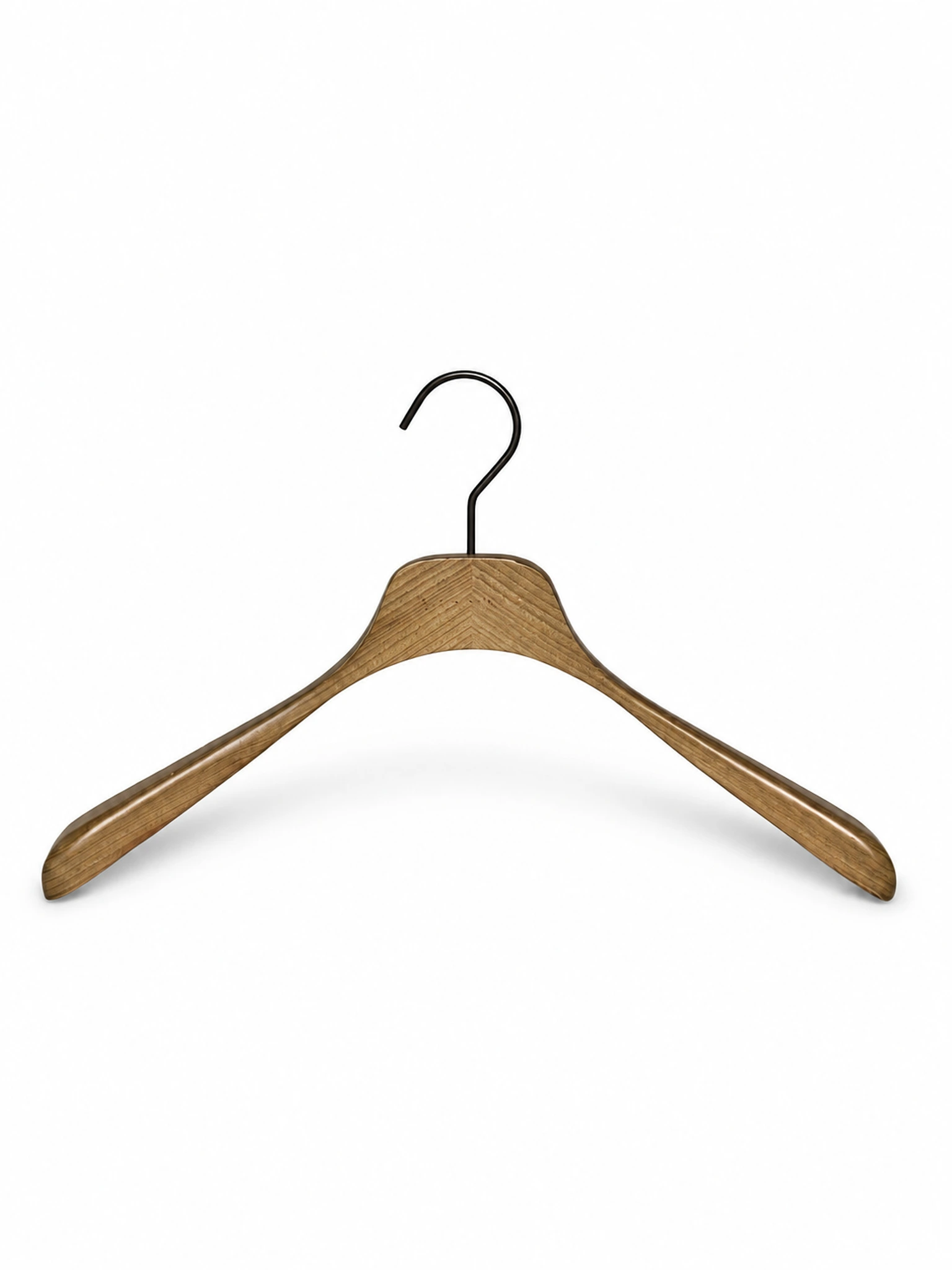
Custom Hanger Buying Guide: Materials, Branding & MOQ
Compare custom hanger materials, finishes, branding options, dimensions and order requirements before starting a retail hanger project.
This custom hanger buying guide covers the decisions that affect garment support, brand presentation and order consistency. A hanger may be small compared with a mannequin or fixture, but customers see and handle it throughout the store. Material, shoulder shape, hardware and branding should therefore be specified as one complete product.
Start with the garment category
Suits, shirts, dresses, knitwear, trousers and children’s clothing place different demands on a hanger. Heavy tailored garments need stronger shoulders and secure hardware. Delicate fabrics may require smooth surfaces, padding or non-slip details. Trousers can use bars, clips or compact specialty shapes depending on the display method.
Choose the right dimensions
Shoulder width should support the garment without stretching or creating points in the fabric. Shoulder thickness affects visual quality and rail capacity. Hook height, bar position and clip width influence how neatly garments align. Provide sample garments so the supplier can confirm the functional fit.
Compare hanger materials
Wood offers a substantial feel and a wide range of stains, paints and grain effects. Acrylic creates a clean contemporary appearance and can be transparent or colored. Metal is useful for slim profiles and specialty displays. Fabric-covered and padded hangers add softness for lingerie, occasionwear and delicate products.
Ask about material grade, load expectations, finish durability and acceptable natural variation. Wood grain and color will vary, so the approval standard should define the range that fits the brand.
Specify the hook and hardware
Hook diameter must fit the store rail. Shape, rotation and finish affect daily use. Chrome, brass-tone, black and custom coatings can coordinate with fixtures, but they should be tested for rubbing and corrosion resistance in the intended environment. Trouser bars and clips also need clear dimensions and protective surfaces.
Plan the brand application
Logos can be printed, engraved, laser marked, embossed or applied with metal plates depending on the material and desired effect. Provide vector artwork, target size, position and color reference. Review legibility on the actual hanger because shoulder curves and wood grain can affect the result.
Review finish samples
A stain, paint or soft-touch coating can look different under retail lighting. Approve the finish together with the hook and logo, not as separate samples. Check edges, notches, bars and clip contact points for smoothness around garments.
Understand quantity and production planning
Minimum order quantity, tooling, sample lead time and bulk schedule depend on the level of customization. Ask the supplier to separate one-time development items from unit pricing. Include an allowance for new stores, replacements and damaged pieces so future small reorders do not become difficult.
Packaging and store distribution
Hangers can scratch each other or tangle during transit if hooks and surfaces are not protected. Confirm carton quantities, inner wrapping and labels. For multi-store rollouts, store-level carton packs can reduce handling at the distribution center.
Information to include in your RFQ
- Garment category and expected load
- Hanger width, thickness and shoulder profile
- Material, color and surface finish
- Hook dimensions and metal finish
- Bar, clips, notches or non-slip features
- Logo artwork, size and position
- Quantity, delivery destinations and schedule
- Packaging and labeling requirements
Approve function and appearance together
Test the sample with real garments and on the actual store rail. The best custom hanger keeps clothing supported, speeds up store operations and presents the brand consistently without drawing attention away from the product.
After approval, keep a master specification with the physical sample. Record color references, logo artwork version, hook finish, packaging and inspection points. This prevents small undocumented changes from accumulating when the hanger is reordered for later seasons or new store openings.
Explore XINTU Display’s hanger collection or request a custom sample for your retail program.