
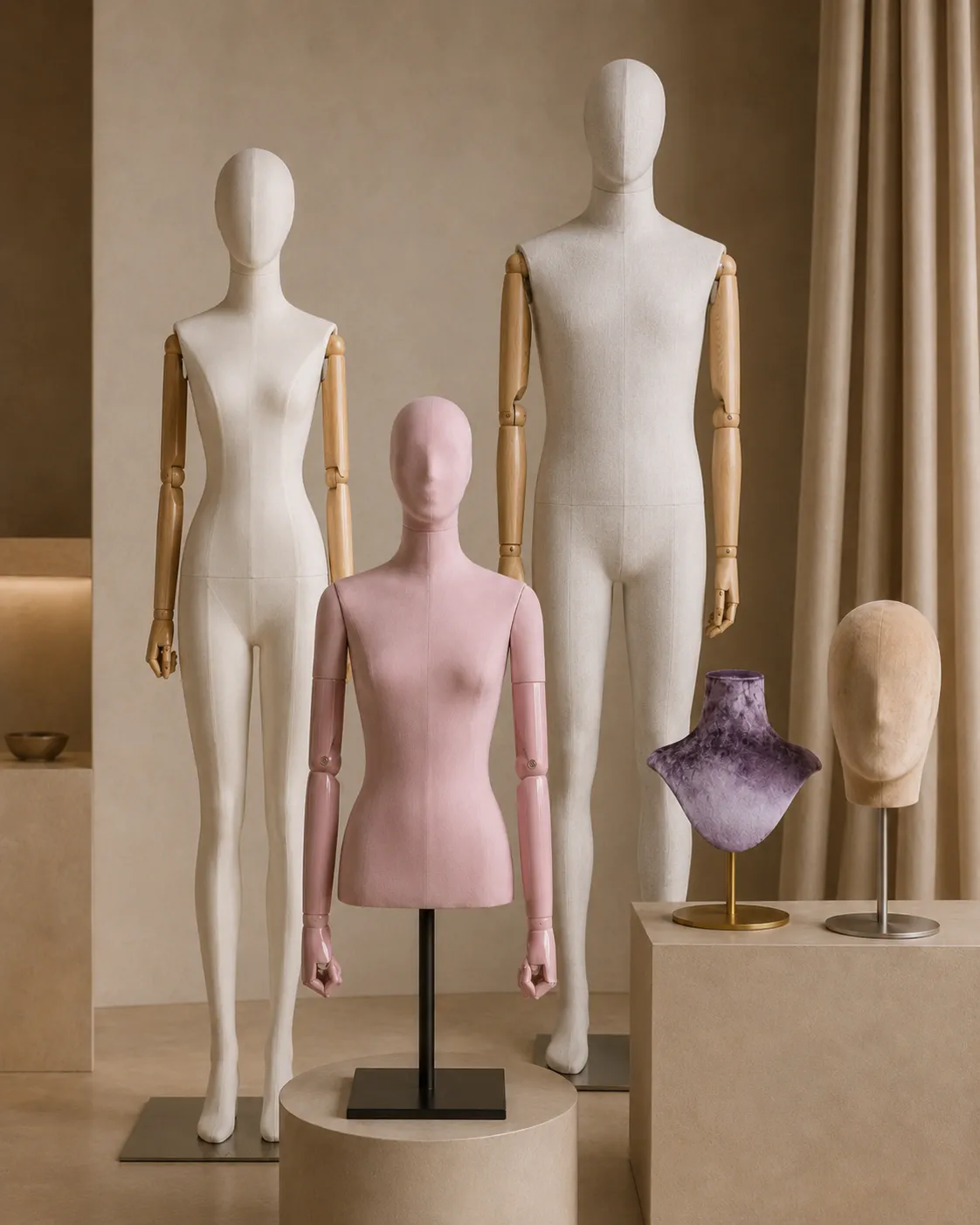
Mannequin Grouping and Composition: Techniques for Retail Displays
Mannequin grouping and composition techniques for retail: odd numbers, height variation, triangulation, spacing and telling a cohesive story.
Mannequin grouping and composition is what turns a row of separate forms into a display that tells a story and sells a look. How you arrange mannequins — their number, height, spacing and angle — decides whether a shopper reads the group as one confident statement or a cluttered line-up. This guide covers the core composition techniques visual merchandisers use to build strong mannequin groups.
Why grouping matters
A well-composed group creates a focal point, shows how pieces work together as outfits, and guides the eye through the display. It also makes a window or floor set feel intentional and brand-led. Grouping works hand in hand with placement across the store — see our mannequin placement guide for positioning groups within the wider floor plan.
Work in odd numbers
Groups of three or five almost always look better than even numbers. Odd numbers avoid a static, symmetrical line and create a natural focal point — usually the central or tallest form. Trios are the workhorse of window displays: enough to show a story, few enough to stay clean.
Vary height and use triangulation
Stagger heights so the group has a clear high point and a visual rhythm. Combine full-body, half-body and torso forms, or raise pieces on plinths and risers of different heights. Arranging the high points into a triangle — one tall element with lower ones either side — is the classic composition trick that reads as balanced and dynamic rather than flat.
Spacing, angles and sight lines
- Leave enough space between forms so each garment is legible, but keep the group tight enough to read as one unit.
- Angle some forms slightly toward each other or toward the main customer flow to create connection and movement.
- Set the group’s focal point at the shopper’s eye line from the main approach.
- Overlap depth — place forms at slightly different depths rather than in a flat row.
Tell a cohesive story
A group should share a theme — a colour palette, a season, an occasion or a collection — so the outfits clearly belong together. Coordinate finishes and bases across the forms so a mix of body styles still looks like one family. This is easier when the mannequins come from one range; consistent fabric and base options keep even a varied group visually unified.
Common composition mistakes
- Lining forms up in a flat, evenly spaced row with no focal point.
- Using even numbers that split the eye instead of leading it.
- Mismatched finishes or bases that make the group look accidental.
- Overcrowding, so individual outfits become hard to read.
Frequently asked questions
How many mannequins should be in a group?
Odd numbers work best — groups of three or five look more natural and create a clear focal point than even numbers. Trios are the most common choice for window displays because they tell a story while staying clean.
Why do visual merchandisers use odd numbers of mannequins?
Odd numbers avoid a static, symmetrical line and give the eye a natural focal point, usually the central or tallest form. This makes the group feel dynamic and intentional rather than flat.
What is triangulation in mannequin display?
Triangulation means arranging the high points of a group into a triangle — one tall element with lower ones either side. It creates visual balance and rhythm, and is a classic composition technique in visual merchandising.
How do I make a mixed group of mannequins look cohesive?
Give the group a shared theme — a colour, season or collection — and coordinate the fabric finishes and bases across forms. Using mannequins from one range keeps a mix of full-body, half-body and torso forms looking like one family.
How much space should be between mannequins?
Leave enough space that each garment is legible, but keep the group tight enough to read as one unit. Angling forms slightly and varying their depth also helps the group feel connected rather than like a flat row.
Building coordinated mannequin groups? XINTU is a custom mannequin manufacturer in China producing full-body, half-body and torso forms with matching fabrics and bases, so mixed groups look like one family. Share your display plan, quantity and reference images for a quote and project support. Contact us.